
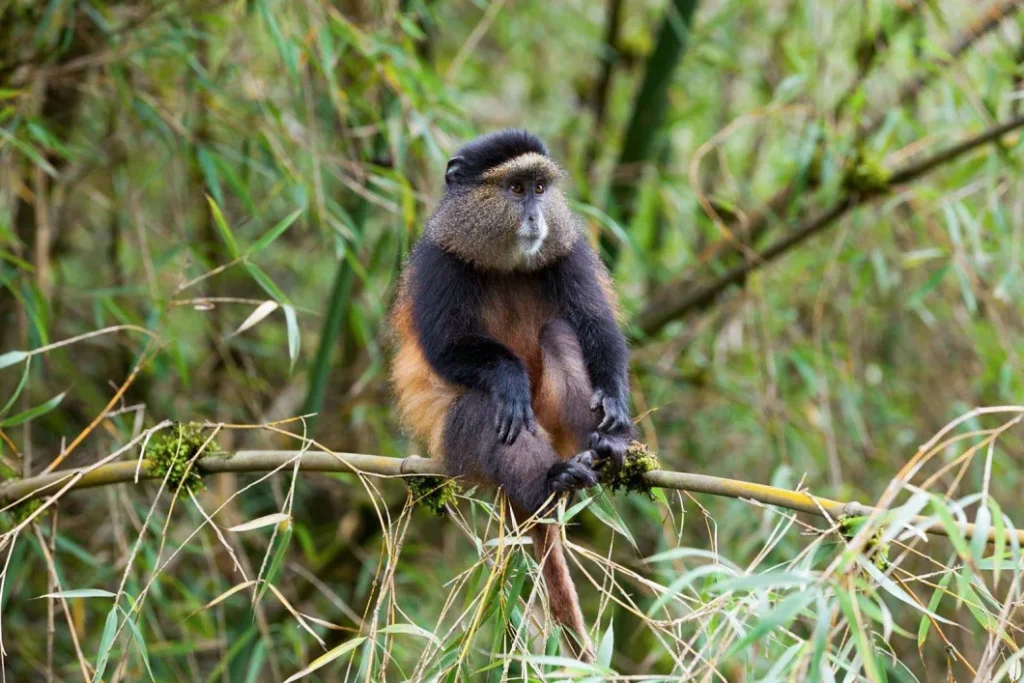
Golden Monkey Trekking for the Elderly: A Gentle Primate Adventure in the Virunga Mountains
Golden monkey trekking is often overlooked in favor of its more famous cousin, gorilla trekking, yet it is one of the most rewarding and accessible primate experiences in East Africa. For senior travelers who want a genuine encounter with wildlife without the strenuous demands of a full-day hike, golden monkey tracking offers the perfect middle ground: shorter trails, gentler terrain, and an hour spent watching one of Africa’s most animated and colorful primates leap through bamboo forest. With the right planning, appropriate pacing, and adequate support, elderly travelers can enjoy this experience comfortably and safely.
Where Golden Monkeys Can Be Found
Golden monkeys are endemic to the Virunga Massif, a chain of volcanoes shared by Rwanda, Uganda, and the Democratic Republic of Congo. The two parks that offer organised golden monkey tracking experience for visitors are:
Volcanoes National Park, Rwanda – located in the northwest of the country near the town of Kinigi. This park is home to two habituated troops, the largest commonly spotted on the slopes of Mount Sabyinyo with about 100 individuals.
Mgahinga Gorilla National Park, Uganda – found in the far southwest of Uganda, close to the borders with Rwanda and the DRC. This park also holds two habituated troops. Mgahinga National Park additionally offers a longer, four-hour habituation experience for visitors who want a deeper interaction.
Both parks provide a moderate altitude for golden monkey trekking compared to the gorilla trekking zones, the golden monkey habitat is usually closer to the park borders, so the trekking trails are shorter and give quick access to the monkeys.
How the Experience Is Done
Trekking begins early in the morning with registration at the park headquarters, usually by 7:00 a.m. Visitors are grouped, given a briefing on park rules and monkey behavior, then driven a short distance to the trailhead.
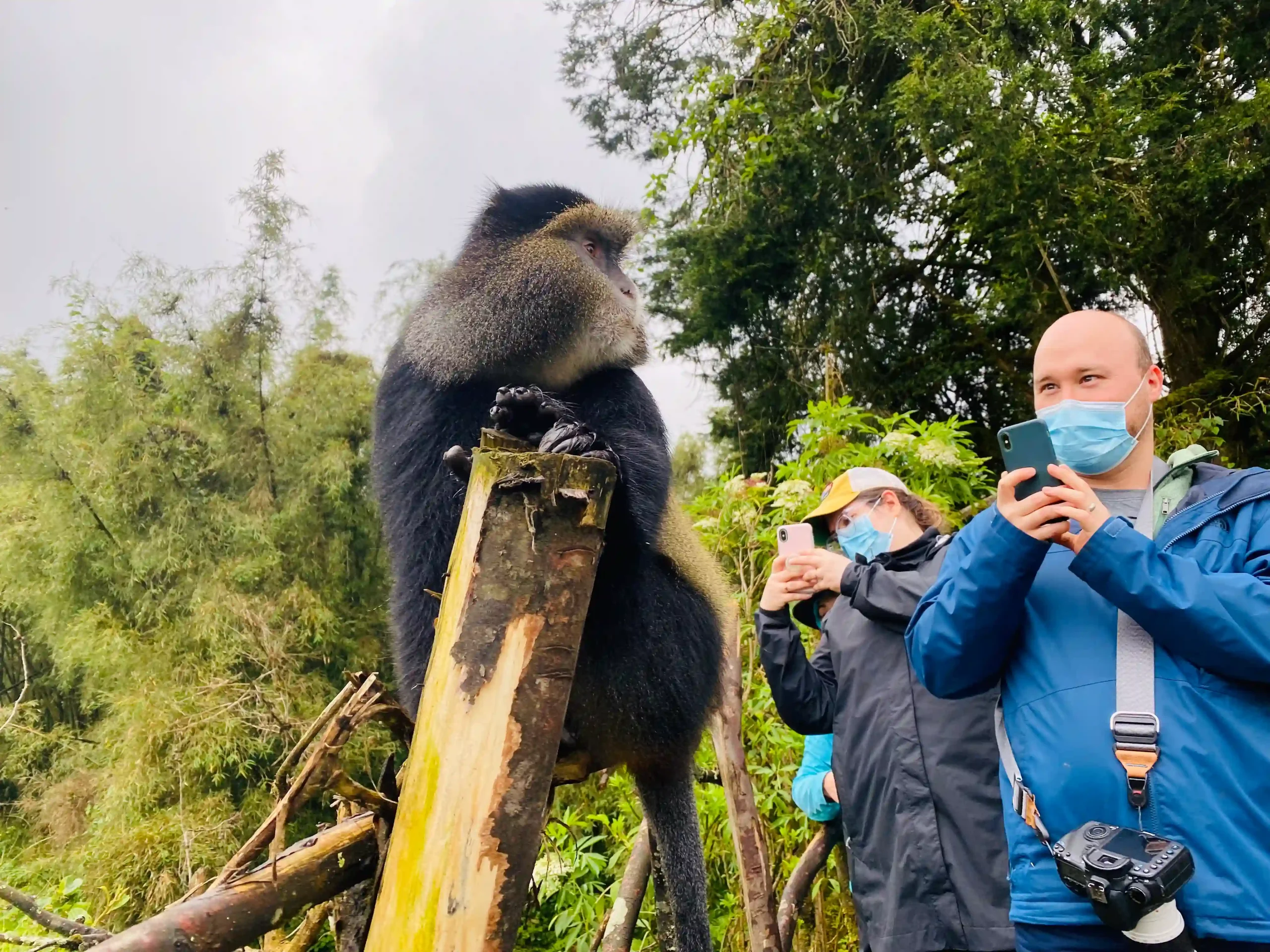
In Rwanda, tracking starts at Kinigi park centre and In Uganda treks start from Ntebeko gate, From the starting point, guides and trackers lead the group into the bamboo forest, where the trackers have typically already located the troop the same morning. Once the group locates the monkeys, visitors are given a full hour to observe, photograph, and enjoy their playful antics before returning to the trailhead.
If you opt for the golden monkey habituation experience in Uganda, your presence and interaction with the animals will last for four hours.
For elderly travelers, and anyone with mobility concerns , they are advised to discuss options with their tour operator in advance.
What Should Elderly Travelers Consider?
The most important consideration is not age alone but mobility, stamina and comfort on uneven terrain. Older travelers should honestly assess how comfortably they can walk uphill, negotiate muddy ground and remain on their feet for several hours.
It is advisable to tell the tour operator about mobility limitations before booking. This allows the operator to arrange appropriate guides, porters, transport and other assistance.
Rwanda has specific provisions for travelers requiring additional accessibility support. Visit Rwanda states that park staff can assist lesser-abled visitors and, where necessary, provide strong physical support or a stretcher for people who cannot walk.
However, accessibility arrangements should be confirmed in advance rather than assumed to be automatically available for every golden monkey trek.
Older travellers should also consider altitude. Volcanoes National Park lies in a high mountainous environment, and the combination of elevation, cool temperatures and physical activity can make the trek feel more demanding than an ordinary walk.
Equipment and Assistance Required for elderly travellers.
Elderly trekkers are strongly encouraged to prepare with the following:
A walking stick – available and given out freely at the park headquarters, and genuinely useful to remain firm as you hike.
Porters – These are members of the local community who can be hired at the trailhead to carry daypacks and, when needed, offer a steadying hand or arm on difficult sections. They also help carry the disabled trekkers on stretchers or sedan chairs. Hiring a porter is not expensive but directly supports the local community.
Sturdy, closed hiking shoes or boots with good ankle support and grip.
Layered clothing – long trousers, a light waterproof jacket, and a warm layer for cooler mornings, since weather in the Virungas is un predictable.
Gardening gloves to protect hands from stinging nettles and touching thorny vegetation.
A hat, sunscreen, and insect repellent.
Drinking water and a light snack to keep you hydrated and energized.
Personal medication, carried in an easily accessible pocket.
People who use a walker at home or get tired quickly on inclined grounds should let the tour company know when placing their bookings so that they can assign a patient guide and, if possible, plan a route to the closer troop.
What to Expect During the Trek
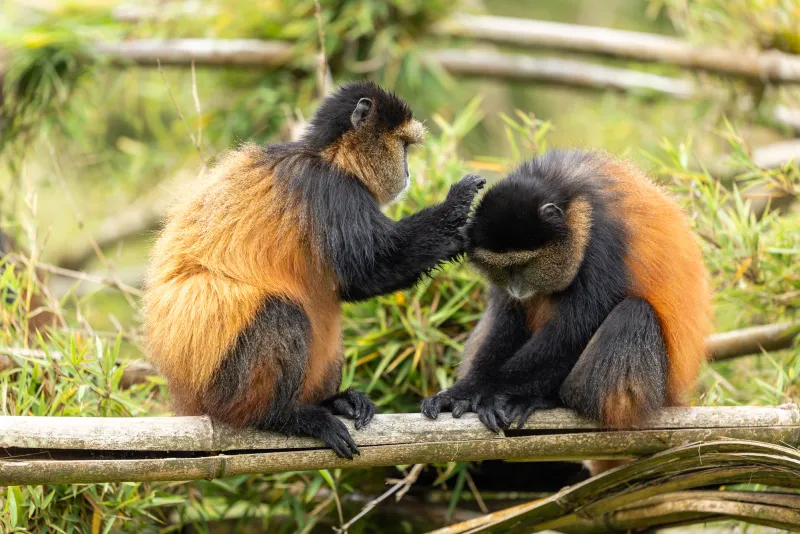
The forest floor is often soft and shaded by dense bamboo, with occasional stinging nettles along narrow paths. Guides set a measured pace and pause frequently, both to check the group’s comfort and to listen for the troop’s movement. Golden monkeys are highly active and rarely stay still, so the hour spent with them is full of movement: monkeys leaping between bamboo stalks, feeding, grooming, and interacting within their large troop. Because they are considerably more numerous and mobile than gorillas, sightings are lively but require a bit of neck-craning and patience with shifting camera angles. After the encounter, the group retraces its steps to the trailhead, where vehicles wait to return everyone to the park headquarters.
How to Book the Golden Monkey Trek for the Elderly
Permits are limited and should be booked well in advance, ideally two to three months ahead during peak season. In Rwanda, permits are issued through the Rwanda Development Board, while in Uganda they are issued through the Uganda Wildlife Authority. Most senior travellers book through a licensed tour operator, who can:
- Arrange the permit on the traveller’s behalf.
- Select a troop known to range close to the trailhead.
- Provide a private vehicle with comfortable seating and minimal walking between stops.
- Arrange a porter and pre-brief guides about any mobility needs.
- Combine the trek with nearby accommodation that limits early-morning travel time.
It is worth confirming directly with the operator that the itinerary includes rest stops and a flexible pace, and that emergency evacuation arrangements are in place, as is standard practice in both parks.
Best Time to Track Golden Monkeys
Golden monkey tracking is possible year-round, since permits are not weather-dependent in the way some other activities are. However, the most favorable conditions fall during the two dry seasons: June to September and December to February. During these months, trails are firmer and drier, reducing the risk of slipping, and the drives to the trailhead are more comfortable. The long rainy season, from March to May, and the shorter rains in October and November, bring muddier paths and are best avoided by travelers concerned about balance or mobility.
Golden monkey trekking rewards patience and a relaxed pace rather than speed or stamina, which is precisely what makes it such a fitting adventure for older travelers seeking a genuine, unhurried encounter with African wildlife.
