
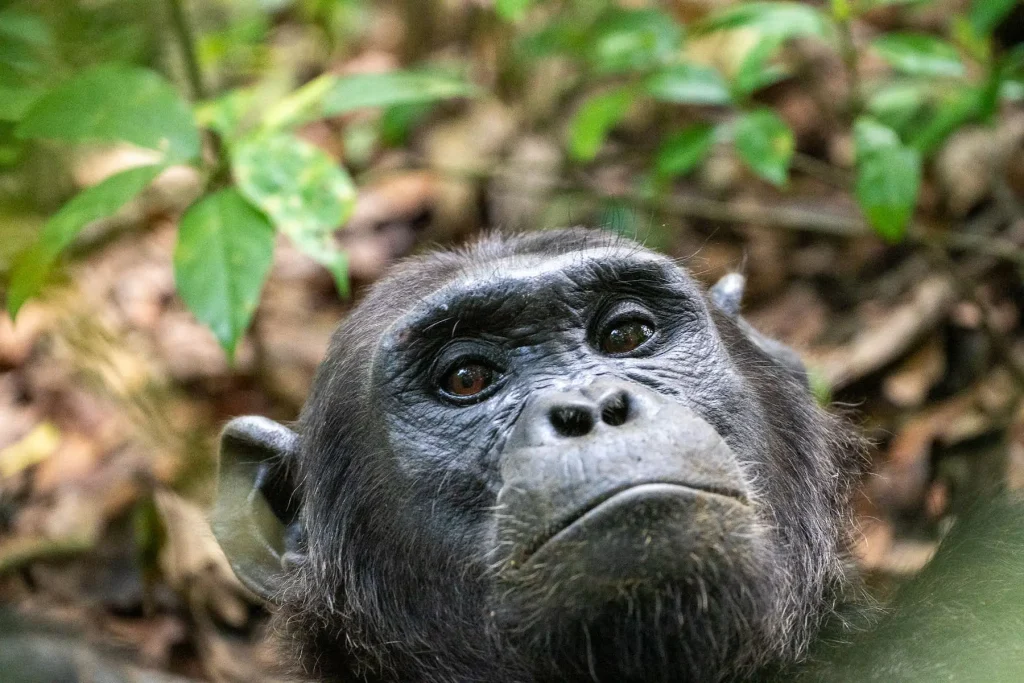
Chimpanzee Trekking in Nyungwe Forest National Park.
Tucked away in the misty highlands of southwestern Rwanda, lies Nyungwe Forest National Park, one of Africa’s oldest and most biologically rich rainforests. Within its dense canopy of ancient hardwoods, tangled vines, and cascading waterfalls lives one of Rwanda’s most sought-after wildlife experiences: chimpanzee trekking.
Unlike gorilla trekking, which is often the headline of most Rwanda safaris, chimpanzee trekking offers something fresher and more dynamic — chimpanzees are fast, vocal, highly intelligent, and constantly on the move, which makes every encounter with them unpredictable and thrilling.
Nyungwe natural forest park is home to more than 500 chimpanzees, alongside other primates, birds and numerous forest species. Different chimpanzee communities have been habituated for tourism and research, making tracking one of the park’s signature experiences.
Trekkers who venture into Nyungwe’s forest trails are rewarded with a rare window into the daily life of human closest living relatives. You will watch them wake, forage, groom one another, care for their young, and communicate through an astonishing range of calls and gestures. For nature lovers, researchers, and curious travellers, chimpanzee trekking in Nyungwe is as both an educational journey and an adventure.
This guide walks you through everything you need to know — where trekking happens, how the activity works, how to get to the park, the best time to go, alternative destinations, and how to prepare for the trek of a lifetime.
Where chimpanzee trekking happens in Nyungwe
Nyungwe National Park is home to different habituated chimpanzee communities, each offering a distinct trekking experience.
The Uwinka Community: Located near the Uwinka Reception Centre- a place where all chimpanzee treks and all other park experiences begin, this is the larger and main group, with more than 40 individuals. Because of the size and vastness of the surrounding forest, this group can be more physically demanding to track. The chimpanzees here tend to move longer distances, further into the forest jungles in search of food, trekkers should be prepared for longer and strenuous hikes through varied terrain.
The Cyamudongo Community Cyamudongo is a smaller, fragmented forest block separate from the main Nyungwe forest. It is home to a well-habituated group that is generally easier to locate and observe thus offering a distinctive chimpanzee tracking experience. Chimpanzees here are more accustomed to human presence, sightings tend to be calmer and more prolonged, making it the preferred choice for many first-time trekkers and photographers. Travellers staying around Gisakura find the Cyamudongo community an appealing choice for their tracking experience.
Gisovu: Gisovu lies in the northern part of Nyungwe forest and offers both the normal chimpanzee tracking and the chimpanzee habituation experience. Tracking in this area takes longer hours, visitors are advised to pack enough energising food and water as the activity takes longer hours than in the other tracking areas of the park. another important chimpanzee experience. The Chimpanzee Habituation Experience offers visitors a chance to spend considerably longer hours with trackers and chimpanzees while learning about their behaviour, diet, movements and identification.
Beyond chimpanzees, trekking zones offer glimpses of other primates that call Nyungwe forest home. These include vervet monkeys, black-and-white colobus monkeys, and several other species that call this ancient rainforest home.
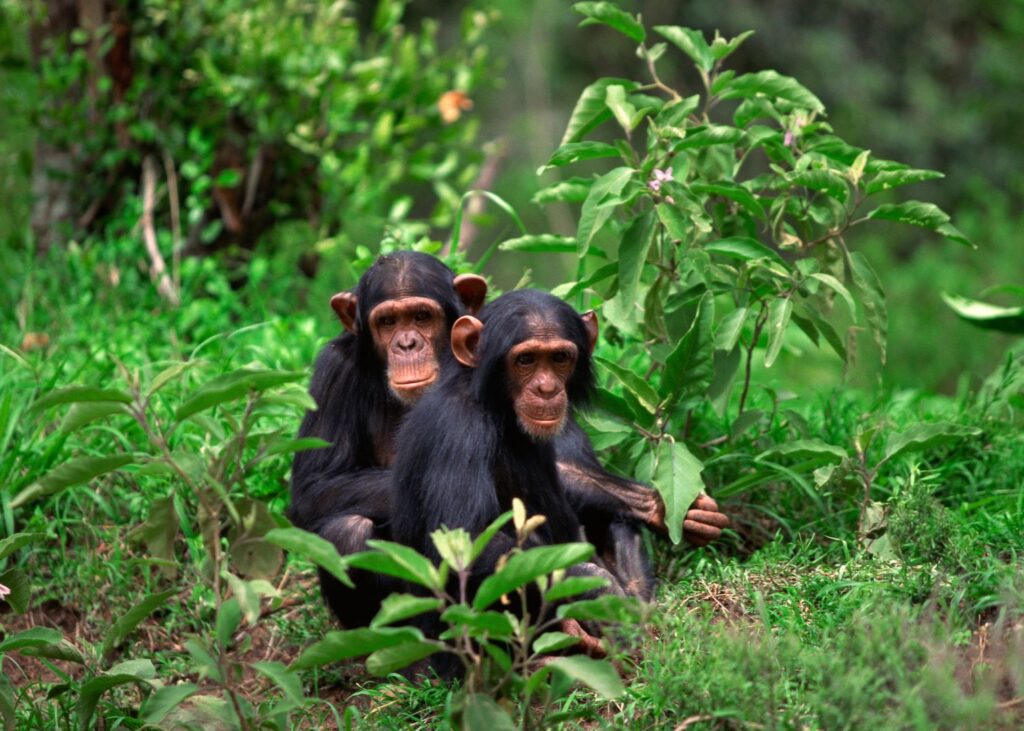
How the chimpanzee trekking activity works
Chimpanzee trekking is a guided park activity in which visitors follow forest trails, with the lead of experienced park guide, until they encounter the habituated chimpanzee group and observe them at a close range. The experience is designed to balance an authentic wildlife encounter with the conservation.
Here is what a typical trek looks like.
Early morning start: Treks begin very early, usually between 4:00 and 5:00 a.m., since chimpanzees are most active and easiest to locate shortly after they wake.
Safety briefing: At the reception center, your guide gives a short briefing on trekking rules, safety expectations, and what to anticipate on the trail. This briefing is an important part of protecting both the visitors and chimpanzees.
The trek itself: From the briefing point, visitors begin the trek with the lead of trained guides and rangers. Depending on where the chimpanzees were last seen feeding or nesting, the hike can last anywhere from thirty minutes to several hours through varying altitudes ranging roughly from 1600 to 2950 meters. Since chimpanzees move constantly through the canopy and undergrowth, trekkers need to be physically prepared to keep up pace with the group.
The encounter: Once the chimpanzees are located, visitors are allowed one hour following the habituated group. During this time, observe feeding behavior, social interactions, grooming rituals, parenting, nests, vocalization and the group’s internal leadership. Photography is generally permitted, but visitors should avoid flash photography and maintain an appropriate distance from the chimpanzees.
Return hike: After the hour of encounter, the group treks back to the starting point, guided by their ranger. Time spent during the trek depends on their location and weather conditions of the day.
To protect the chimpanzees from stress and disease exposure, park regulations limit each habituated group to a maximum of two visiting groups per day, and every visit is capped strictly at one hour of observation time.
Getting to Nyungwe Forest National Park
Nyungwe can be reached by road, air, or water, and each route offers a different balance of cost, comfort, and scenery.
By Road
Traveling by road is the most popular and most affordable way to reach Nyungwe, and it offers the added benefit of scenic countryside views along the way. The drive from Kigali takes approximately five to six hours or more depending on the road and weather conditions, through rolling hills, tea plantations, and small towns that exhibit Rwandan life.
From Kigali, head southwest to Muhanga, then continue south to Nyanza before reaching Huye town (about 32 km from Kigali on a smooth but winding road).
From Huye, continue west toward Nyamagabe, which lies close to the park’s entrance.
A private safari vehicle is the most convenient option as many travelers combine the road trip with stops at cultural and historical landmarks such as the Nyanza King’s Palace, Ethinographic Museum, and the Gikongoro Genocide Memorial Centre, adding flavour to the journey beyond wildlife viewing. Guided tours often build in flexible stops for photography and rest, making the drive itself part of the overall Rwanda experience.
For budget-conscious travelers, public buses are also available to connect from Kigali to Nyungwe area. Buses depart from Nyabugogo bus terminal in Kigali toward Rusizi, with some routes passing directly through the park and stopping at Uwinka. This option can take up to eight hours, so early departure is essential. Several established companies — including Ritco Express, Alpha Express, and Omega Express — operate this route, each following slightly different paths through the western province.
By Air
Regular chartered and scheduled flights connect Kigali International Airport to Kamembe National Airport with a the flight taking approximately 40 minutes. From here travellers connect to the park by road . Its approximately one-hour drive from Kamembe airstrip to Gisakura and 1.5 hours to Uwinka.
For a more immersive aerial experience, helicopter charter services offer scenic flights from Kigali straight to Nyungwe, soaring above tea estates, valleys, and forested ridgelines — a spectacular introduction to the landscape before you even set foot on a trail. This option is useful for travellers seeking a comfortable experience and want to minimise driving time.
By Water
The most unconventional, not direct — and arguably most memorable — route to Nyungwe is by boat across Lake Kivu. Travelers can depart from towns such as Rubavu or Karongi and sail toward the Kamembe area near the park, a journey that typically takes six to eight hours. Along the way, passengers enjoy sweeping views of the lake’s islands, shoreline villages, and opportunities to interact with local communities during stops. While slower than flying and less direct than driving, this route appeals to travelers who see the journey itself as part of the adventure. The final part of the journey connects to the trekking area by road.
Whichever route you choose, planning ahead with a reputable tour operator can simplify logistics considerably, particularly for combining transport with accommodation and trekking permits.
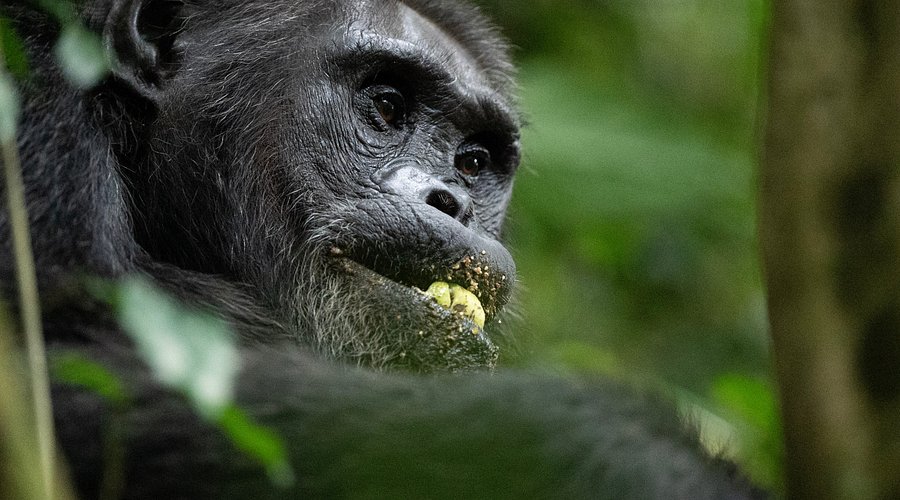
Best time to visit Nyungwe for Chimpanzee Trekking
Timing plays a major role in the success of a chimpanzee trek, both in terms of daily scheduling and seasonal planning.
Time of day: Chimpanzees are easiest to observe in the early morning, shortly after they leave their nests to begin feeding. This means visitors typically wake around 4:00–4:30 a.m. to reach one of Nyungwe’s reception centres in time for a 5:00 a.m., briefing and then departure to the trailhead.
Time of year: Chimpanzee tracking is available throughout the year, but the drier periods of June to September and December to February are generally considered the most comfortable for trekking. Trails tend to be less slippery, and walking conditions are usually easier.
The wetter seasons are also rewarding as the forest becomes exceptionally lush, waterfalls are impressive and the landscape takes on a spectacular green appearance. Travelers who do not mind wet and muddy trails may therefore enjoy visiting outside the peak dry periods.
However, Nyungwe is a rainforest, where rain is unpredictable, it can occur even during the drier months. Visitors should always carry rain protection gear regardless of the season.
Other Chimpanzee Trekking Destinations in Rwanda
Nyungwe is the best place in Rwanda to see chimpanzees, though it’s not the only place. A large group of chimpanzees resides in Gishwati-Mukura National Park, which is Rwanda’s newest and fourth national park located in the western part of the country. Many of these chimps in this park have been habituated and can be trekked. This is a great option for tourists who may not be able to get into Nyungwe because the permits are fully booked and those who want to experience a different part of Rwanda’s forest ecosystems.
What to Carry for Chimpanzee Trekking
Proper preparation makes a significant difference in comfort and safety during the trek. Essential items include:
Sturdy hiking shoes with good grip, since forest trails can be steep and slippery.
- Lightweight clothing that allows ease of movement without overheating during the hike.
- Insect repellent to guard against mosquitoes and other forest insects.
- Gardening-style gloves to protect your hands from thorny vegetation along the trail (these can be removed during the observation hour for photography).
- A camera to capture the experience, ideally with a strap for quick, secure handling.
- Long-sleeved shirt and trousers to protect against thorns, scratches, and safari ant bites.
- A walking stick, usually provided at the start of the trek, for stability steep terrain, on uneven or muddy ground.
- Energy snacks and drinking water, to keep you hydrated and energetic since the duration of a trek can vary widely depending on the chimpanzees’ location.
- A warm sweater or fleece, as mornings and evenings in the rainforest can be surprisingly cool.
- A waterproof rain jacket or poncho, given Nyungwe’s status as a genuine rainforest where sudden showers are common.
- A comfortable backpack to carry all your gear, including water, snacks, and camera equipment.
- Long socks, tucked into trousers, to keep safari ants from reaching your skin.
Porters are typically available at the trailhead for those who would like assistance carrying their backpack and help navigating steeper sections of the trail.
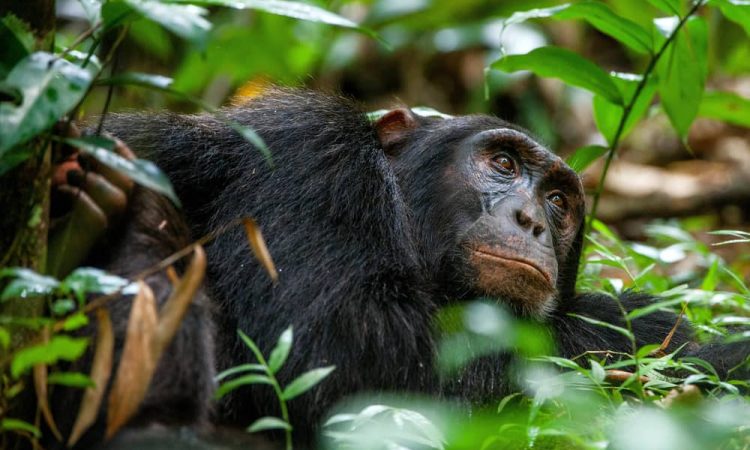
Guidelines for Chimpanzee Trekking
To protect both visitors and the chimpanzees, all trekkers are expected to follow park guidelines closely:
- Always maintain a safe distance from the chimpanzees to reduce the risk of disease transmission between humans and the primates.
- Avoid using camera flash, as sudden bursts of light can startle or agitate the animals.
- Never litter in the park; discarded waste can harm wildlife and disrupt the forest ecosystem.
- Do not feed the chimpanzees and do not eat in their presence.
- Keep movements calm and minimal while in the presence of the group to avoid causing stress or provoking defensive behaviour.
- Keep noise levels low, since loud sounds can scare the chimpanzees away and disturb other trekking groups.
- Always follow your guide’s instructions, as chimpanzees remain wild animals capable of unpredictable and occasionally aggressive behaviour.
Chimpanzee trekking in Nyungwe Forest National Park is more than a wildlife activity, it is an intimate encounter with one of nature’s most intelligent and socially complex species, set against the backdrop of one of Africa’s oldest rainforests in southwestern Rwanda.
