
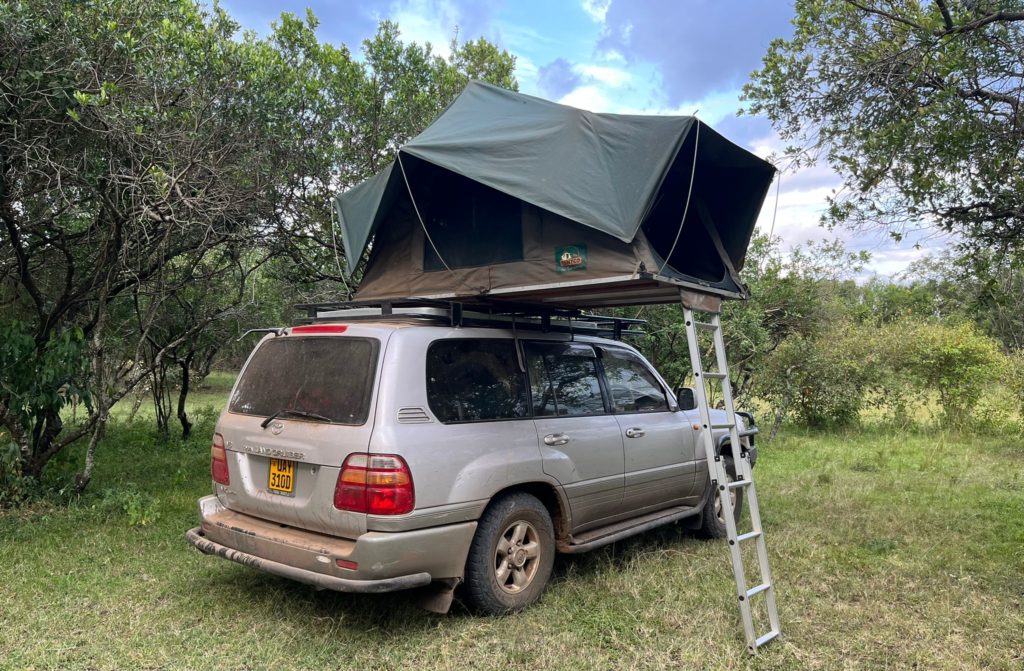
How to save on Car Hire in Rwanda Rwanda is a small country with the most rewarding scenery. In a few hours you can reach out different parts of the country with ease, drive from the capital- Kigali to the misty slopes of Volcanoes National Park, to the savannas of Akagera national park, Nyungwe national park or south to the shores of Lake Kivu. Renting a car is one of the best ways to see all of this at your own pace. But car hire costs can add up quickly if you don’t plan well. Fuel, insurance, permits, and daily rates all play a part in your final bill. This guide walks you through simple, practical tips to help you save money on your next car hire in Rwanda, without cutting corners on safety or comfort. Consider booking early Rental companies in Rwanda often charge highly for last-minute bookings, especially during the dry seasons (June to September and December to February) when tourist numbers rise for most activities that are sought after by most travellers. Booking weeks or months ahead usually gets you better rates and a wider choice of vehicles. It also gives you time to compare prices calmly instead of accepting the first offer you see at the airport. Compare local and international providers International rental brands are convenient, but local Rwandan car hire companies often charge lower daily rates for the same type of vehicle. Local companies also tend to know the roads better and can advise you on routes, fuel stops, and current road conditions. Get quotes from at least two or three providers before you decide. Look closely at what is included in the price, since a slightly higher quote with fuel and insurance built in can end up cheaper than a “bargain” rate with extra charges added later. Choose the right vehicle for your trip Renting a large 4×4 for a trip that only needs a small saloon car wastes money on fuel and daily hire fees. If you plan to stay mainly in Kigali or travel on paved roads between major towns, a compact or standard sedan is usually enough. If you’re heading to Volcanoes National Park, Nyungwe Forest, or other areas with rougher roads, a 4×4 is worth the extra cost for safety, comfort, and reliability. Matching the car to your actual route, rather than renting the biggest option is the easiest way to cut costs. Consider long term rentals. Many rental companies offer lower/ discounted daily rates for weekly, monthly or longer bookings compared to short rentals that last for less than a week. If your trip includes several days of driving, ask about weekly pricing even if you’re not sure you’ll use the full week. The savings per day on long term rentals can be significant, and having the vehicle for longer also gives you flexibility to change your plans without extra booking fees. Understand the fuel policy Fuel is one of the biggest hidden costs in car hire. Always ask whether the rental comes with a “full-to-full” policy, where you return the car with the same fuel level it had at pickup. This is usually the cheapest option, since prepaid fuel plans often charge more per litre than local pump prices. If you are self driving, fill your fuel tank in the big towns before getting into savanna parks for game drives or getting into deep rural areas. Avoid returning the car with less fuel than agreed, as some companies charge a premium to refill it themselves. Compare Self-Drive and Chauffeur-Driven Hire Self-drive is generally cheaper on paper but comes with hidden costs. Rwanda’s roads can be steep, narrow, and unfamiliar to visitors, especially outside Kigali. A chauffeur-driven car costs more per day but can save you money overall by avoiding wrong turns, fines, any worries any about navigation, which can lead to costly excess charges. Before choosing the type of hire you wish to have, compare the advantages of either side for a safer and comfortable exploration. Understand the insurance policy. Basic insurance is usually included in the rental price, but it often comes with a high excess (the amount you pay out of pocket if there is an accident). Many companies offer reduced-excess or full-cover insurance for an extra daily fee. While this adds to the cost upfront, it can save you a large, unexpected payment if something goes wrong, especially on Rwanda’s winding mountain roads. Read the insurance terms carefully and choose the level of cover that matches how much risk you are comfortable carrying yourself. Analyse the Airport pickup charges Picking up a car directly at Kigali International Airport is convenient, but airport locations often carry a surcharge compared to city-centre offices. If your hotel offers a shuttle or is a short taxi ride from the airport, consider collecting your rental car from a city branch instead. The taxi fare is often much lower than the airport pickup fee. Read the Contract for Hidden Charges Before you sign anything, check the mileage limit (some rentals cap free kilometres and charge extra beyond that), the cancellation policy, and any cleaning or late-return fees. Take clear photos or a short video of the car’s condition at pickup, including any existing scratches, so you’re not billed for damage you didn’t cause. A few minutes of care here can prevent a large, unexpected charge later. Travel in the shoulder season. The peak season (June to September) pushes up demand for both cars and gorilla permits. If your travel dates are flexible, consider visiting during the shoulder months, just before or after the peak dry seasons. Buring these months, the roads and weather are still manageable, rental prices and availability are usually better because fewer tourists are competing for the same vehicles.
Category Archives: Uncategorized

Mar
Where to see gorillas in Africa Where to see gorillas in Africa, Gorillas are arguably the most fascinating apes in the natural wilderness. They are large, powerful, but very gentle, and organized creatures. Gorillas are special apes that behave like humans and share 97% of human DNA. Gorillas are endemic to Africa mainly in the East, central, and sub-Saharan African forests. There are two main gorilla species, the western gorillas and the eastern gorillas. The western gorillas are further divided into the Cross-river gorillas and the Western lowland gorillas. The eastern gorillas are divided into the Eastern lowland gorillas and the mountain gorillas. Gorillas are herbivores and mainly feed on vegetation. They mainly feed on bamboo shoots, tree stems/bark, fruits, and rarely on termites. Gorillas live in small groups known as families. Each family comprises the dominant Silverback as the leader, females, and their siblings. The main role of the dominant silverback is to watch over, protect his family, and determine where to feed and rest. The overall population of gorillas has reduced significantly in the last few decades. Most of the species of gorillas are listed as critically endangered or threatened due to hunting, diseases, war/instability, animal trafficking, and habitat loss (due to mineral exploitation). Protecting these great apes from extinction should be a collaborative effort involving governments and wildlife conservation Agencies from countries where these animals find refuge. Protecting the primates enhanced through stopping the illegal trade of baby gorillas, stopping forest encroachment, and doing away with poaching. The local community should also be involved in the conservation efforts through collective awareness for the best environmental protection. Best places to see gorillas in Africa Mountain gorillas always spend most of their lifetime in high altitudinal areas of 2200- 4300 meters above sea level. Their natural habitats are Uganda, Rwanda, and The Democratic Republic of Congo. DRC has both mountain and eastern lowland gorillas. The cross-river gorillas and western gorillas can be found in countries like Angola, Cameroon, Equatorial Guinea, Gabon, Nigeria, Central African Republic, and Congo Brazzaville. Though most travelers visit Uganda Rwanda, and DRC, West Africa has more amazing adventures if one can bear with the discomfort and traveling longer distances. Guided gorilla treks to any of the above countries are equally rewarding and worth the cost. Where to see gorillas in Uganda. Uganda is one of the best places to see mountain gorillas. Half of the overall population of mountain gorillas are found in Uganda and in two national parks –Bwindi Impenetrable National Park and Mgahinga National Park. Bwindi Impenetrable National Park is found in the southwestern part of Uganda, about 9-10 hours’ drive from Entebbe or Kampala and 3-4 hours’ drive from Kigali in Rwanda. This park was established in 1991 and was designated a UNESCO World Heritage Site in 1994. It covers 160 sq. km and is largely composed of lush tropical rainforest. In comparison to other gorilla destinations, Bwindi is home to the largest number of gorilla population in Africa with approximately 500 mountain gorillas. Tracking mountain gorillas in Bwindi Impenetrable National Park is conducted in any of the four sectors that is; Ruhija in the East, Buhoma in the North, Nkuringo, and Rushaga in the South. All these sectors have different gorilla families but whichever region you choose for tracking, the experience is equally rewarding. This park has a total of 21 habituated gorilla families which provides travellers a choice to carry out their expedition. Buhoma region is comprised Habinyanja, Katwe, Mubare, Binyindo, and Rushegura; Ruhija region consists of Mukiza, Oruzogo, Bitukura, Kyaguriro Nkuringo region has Christmas, Nkuringo, Bushaho and Posho family; Rushaga region features gorilla families such as Bweza, Bikingi, Mucunguzi, Kahungye, Nshongi, Kutu, Busingye and Mishaya. Uganda is the only country where one can participate in the gorilla habituation experience that provides an opportunity to observe the primates for 4 hours compared to standard gorilla trekking where tourists are only allowed one hour with a gorilla group. The chances of seeing mountain gorillas in Uganda are very high that’s why many tourists even prefer tracking in Uganda but travelling from Rwanda and the permit cost is only $800 which is affordable by even budget travellers. Mgahinga National Park This is the second-best place to trek mountain gorillas in Uganda. This park is such a remarkable destination to visit especially if you are interested in less crowds because it has one habituated gorilla family (Nyakagezi). Mgahinga National Park too lies in the southwestern part of Uganda and is part if the Virunga ranges that are shared by Uganda, Rwanda and DRC. It was founded in 1991 and covers 33 square kilometers. Visitors to Mgahinga National Park begin their treks from Ntebeko Visitor Center after an early morning briefing and later start on the challenging but interesting hike to meet the gentle giant apes in their natural habitat. Where to see gorillas in Rwanda Rwanda is thought to be the most convenient place to track mountain gorillas in Africa. Rwanda well-developed tourism infrastructure as compared to her neighbours that offer the same services. Mountain gorillas in Rwanda are found in Volcanoes National Park. Volcanoes National Park is one of the legendary parks in Africa that was established in the 1960s and is home to over 30% of the remaining mountain gorillas in the world. This is the place where the famous primatologist Dian Fossey established abase and put all her efforts on preservation and protection of mountain gorillas and their habitat. The Parc National des Volcans (PNV) is part of the Virunga Conservation Area and is home of five Virunga volcanoes: Sabinyo (3.674 m), Gahinga (3.474 m), Bisoke (3711 m), Muhabura (4.127 m), and the Karisimbi, the highest volcano with an altitude of 4.507 m. This park comprises 12 habituated gorilla families including, Kurira, Igisha, Amahoro, Umubano, Karisimbi, Sabinyo, Kwitonda, Hirwa, Agasha, Isimbi, Muhoza, and Titus gorilla families. All these families are open for daily tracking , trekkers are free to request for an easy, medium, or hard trek depending on the […]

Mar
Golden Monkey Trekking in Volcanoes National Park Golden Monkey Tracking in Volcanoes National Park, Golden monkeys also known as “celebes black macaques” are part of the Sykes monkey species (blue monkeys). Golden monkeys are some of the endangered primate species that are found in the mountainous forests of East and Central Africa particularly the Virunga ranges that are shared by Uganda, Rwanda, and the Democratic Republic of Congo. They were listed as endangered species along with the mountain gorillas on the International Union of Conservation of Nature(IUCN) and there are estimated to be 5000 individuals remaining in the world and these exist in the Virunga ranges. Golden monkeys are characterized by striking golden-orange fur, the legs and face have black fur with short tails. The only way that you can differentiate the males from the females is that the males have dark gold and black while the females are slightly pale and lighter. They are social animals and live in groups called troops. Each troop consists of the dominant male, the females, and their offspring. Golden monkeys are primarily herbivores and love feeding on bamboo shoots, leaves, fruits, seeds, and flowers and this is why they are easily spotted in bamboo forest vegetation. At times they are seen feeding on termites, snails, and other small insects. Unlike gorillas that change nests daily, golden monkeys sleep in the same nest the full day, even if they move long distances as they search for food, they come back to the same place where they spent the night. Golden monkeys are particularly found in Mgahinga National Park in uganda, Kahuzi Biega National Park in DRC, and Volcanoes National Park in Rwanda. So, as you visit these parks for gorilla expeditions, do not miss out on seeing the attractive beauty of the golden monkeys in these parks Golden monkey trekking activity This is a full-day activity that begins with an early morning briefing from the park guides and rangers at the park headquarters. Participants are addressed on what they expect to find in the park jungles and how to conduct themselves in the presence of these charming apes. After briefing, you are given a walking stick as the activity involves hiking through different terrain and altitudinal zones. You are free to hire a porter to help carry your luggage. Golden monkey trekking is a bit easier than gorilla trekking as they can be spotted in a shorter time. this doesn’t mean that you will find them in the shortest distance possible. However, you must move steadily and quietly so that you don’t scare them. Set your cameras in the fastest shuttering shot because they usually jump from one tree to another. On interaction with the golden monkeys, you will be allowed to spend one hour then return to the park center. There are many golden monkeys in Volcanoes National Park but only 2 families are inhabited, the largest family which comprises 100 members is mostly visited and most of them are found on Mount Sabinyo which is shared by the three countries. A golden monkey permit in the Volcanoes National Park costs $100 per person and is sold to persons of 12 years and above and one is advised to book in advance to avoid last-minute disappointments. The best time to visit Volcanoes National Park for golden monkey trekking should be the dry season in June to August and December to February. This is because the tracking trails are always dry and passable. The vegetation is not fully grown which enables quick sight of the monkeys and photography of the apes is easier. Other places where to find golden monkeys in Rwanda In Gishwati Mukura National Park, a newly established park that comprises two forests, Gishwati and Mukura. Golden monkeys have been discovered in this park but haven’t been opened for trekking In Nyungwe Forest National Park, which is popularly known as a habitat for chimpanzees, golden monkeys have been spotted there but the golden monkey trekking activity has not yet started. You can only spot golden monkeys in this park while on nature walks or other primate trekking.