
Nyanza Kings Palace Museum – Butare
The King’s palace Museum is one of Rwanda’s most significant historical, cultural and heritage sites. The museum is located in the town of Nyanza, which is about two hours drive, south, from Kigali. Itis a place to honor and preserve Rwanda’s former monarchy thus giving tourists a unique chance to learn about the customs, architecture, and royal style and structure of the former kingdom of Rwanda.
The museum was built on the spot where Rwanda’s kings used to rule the nation before the monarchy system was abolished in 1961. Today, this place serves as a museum, and a sign of Rwanda’s national cultural character and resilience.
The king’s palace Museum is a must stop over for travellers heading to Nyungwe National Park. At this place, visitors can see famous long-horned Inyambo cattle, traditional royal architecture, and explore around a colonial-era house that shows how the country’s political and cultural structure has changed over time.
Historical background of Nyanza
Nyanza was a very important place to the Kingdom of Rwanda for many hundreds of years. Before it was taken over by Europeans, Rwanda was ruled under a monarchical system, with the Umwami (king) as its leader.
Before Kingi Yuki V Musinga established a stable royal court in Nyanza, the royal court always moved from place to place in the nineteenth century. After this establishment, Nyanza became the main cultural and political centre of the kingdom.
This place became home for kings, queens, royal advisors and traditional artists within and around the court. Monarchism existed until colonial administration, which was first by the Germans and later the Belgians.
With colonialism under the Belgians, many political and cultural changes occurred , King Yuhi V Musinga was taken from power in 1931, partially because he didn’t want to follow Christianity or accept colonial rule. King Mutara III Rudahigwa, his son, was restored as king and became one of Rwanda’s most famous kings. During his reign, Rwanda became more modernized, got better communication and deep interactions with the British government.
When Rwanda got its independence in 1962, the monarchism was finally ended. The royal palace was turned into a museum to preserve the country’s royal history and is currently a place that should d not be missed while on a Rwanda adventure.
What to see at the King’s place museum
The king’s palace
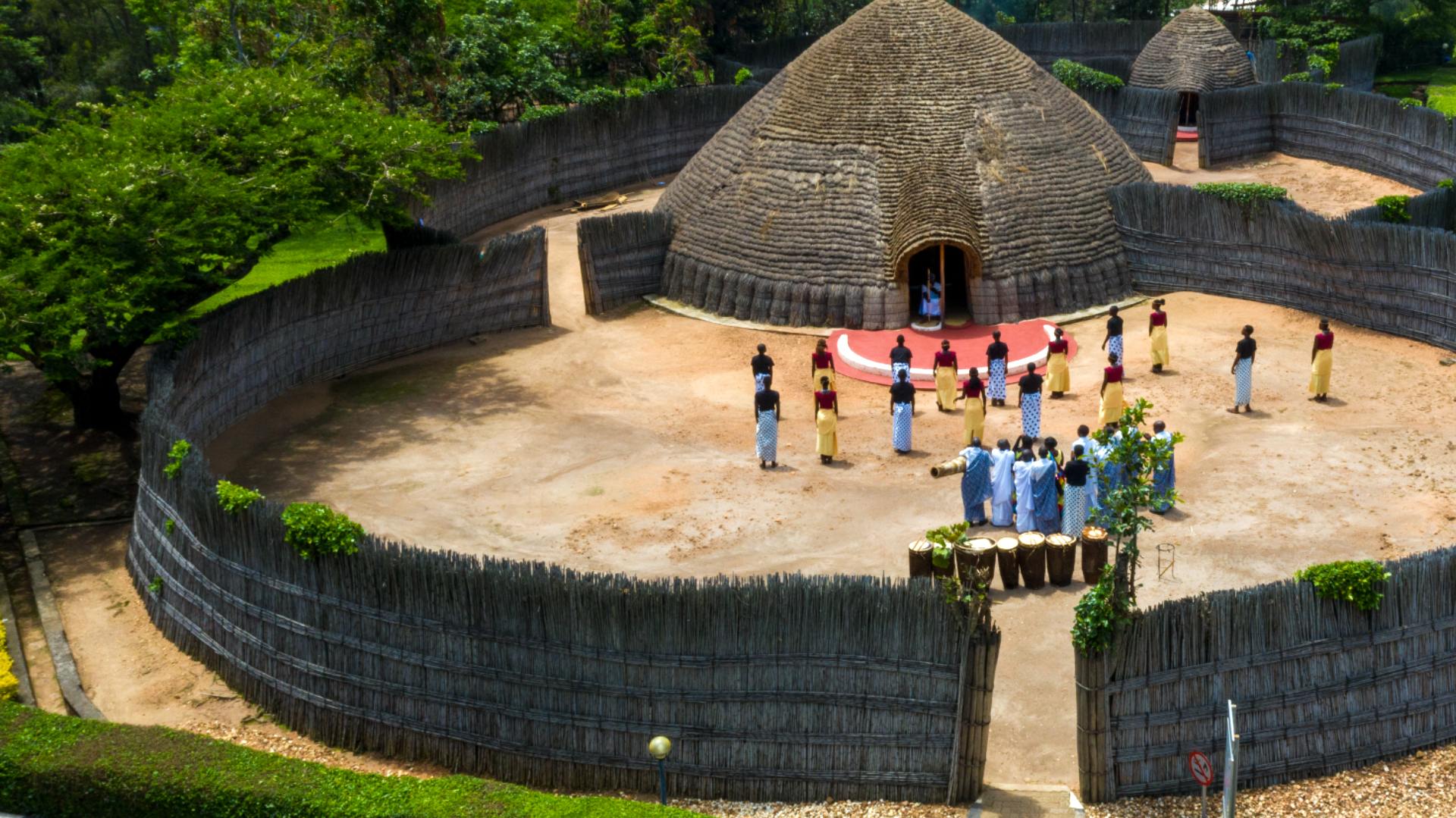
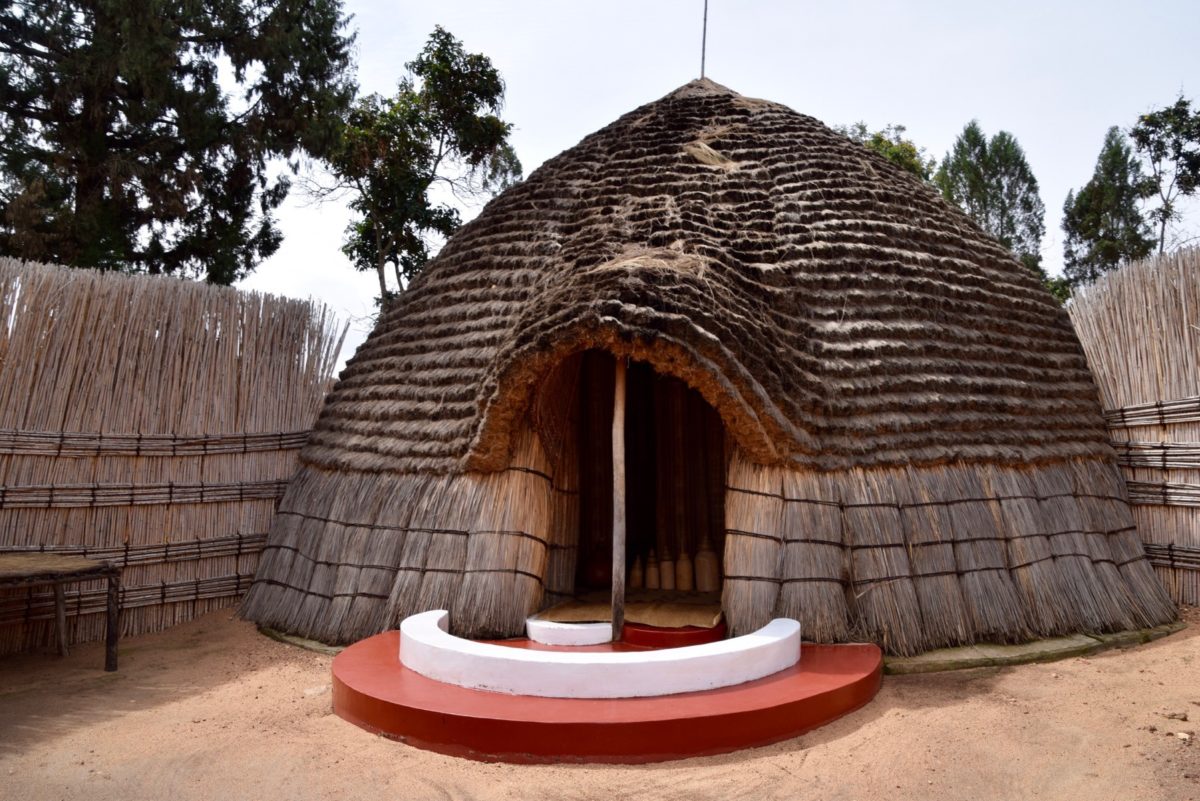
The King’s Palace in Nyanza is an image of the royal traditional palace. It is a huge and impressive rebuild made with the same materials and methods that were used by King Yuhi V Musinga to build the original palace in the 1800s. When you visit this place, inside the palace, the guides tell about the history and traditions of the royal court. They explain the importance of things inside like the King’s bed position, the armoury lay out position, the Queen’s position, how service staff and visitors were treated, and many cultural behaviors inside the palace. There are also beehive-shaped straw huts in the model palace complex that were used to make royal beer and milk for the king and queen.
The modern palace – the museum
The modern palace next to the old palace was built in 1932 for King Mutara III Rudahigwa. It served as the royal court until the end of the kingdom in 1962. It was turned into a museum in 2006 and now showcases more about the beaty of Rwandan culture and tradition from Rwanda’s monarchy regime from the 15th century to the present day. Some of the kings’ possessions and artifacts are also displayed in this museum
The famous Inyambo cattle
The Inyambo cattle are one of the most interesting things to see at the Nyanza King’s palace museum. This herd of long-horned cows comes from the royal cattle that Rwanda’s kings owned. In Rwanda’s tradition cattle represent wealth, power, beauty, and royal authority.
The Inyambo are famous for having huge, bent horns and move gracefully. In the past, they were used at royal events and parades. They were decorated with jewels and taught to move gracefully to the music their masters sang. Visitors to the museum can still see caretakers singing traditional songs to the cattle, a way of carrying on a practice that goes back hundreds of years and observe the cows’ response to the songs. These cows are a memorable traditional aspect that connects Rwandans to their royal heritage.
Cultural importance of the museum
The King’s Palace Museum is an important part of keeping Rwanda’s culture alive. Throughout its history, Rwanda has gone through huge changes in its government and society. The museum helps keep royal history and traditional customs alive.
The reconstruction of the royal residence with bee -hive structure using natural materials, is a way of preserving culture and traditional engineering techniques. this helps the young generation to see and learn the origin of their tradition in comparison to the present modern housing structures.
The museum provides knowledge about pre-colonial Rwanda, the monarchy regime, the time during colonial rule and transition to modernity after independence.
How Rwandan culture has changed over time
The museum is a source of joy for many Rwandans who are proud of their cultural roots and historical successes.
Rwanda is seeing more cultural tourism, and the King’s Palace Museum plays a big role in this industry as it attracts people from all parts of the world.
The tourism experience at the museum
Visiting the King’s Palace Museum is informative and engaging. The museum is about two to three hours drive from Kigali, so many people who are traveling in southern Rwanda go there for a 1day exploration while others stop over for a few hours before heading further to Nyungwe National Park.
Guided walks in the museum are always conducted for you to get a better understanding of royal traditions, symbols, and historical events. The guides tell stories that bring Rwanda’s royal past to life.
The surrounding hills and beautiful landscapes greatly add to the beauty of the experience.
Tourists often visit the King’s Palace Museum and other nearby sites at the same time, like the Ethnographic Museum in Huye and Nyungwe National Park.
Visitor information at the museum
- -The museum is open daily from 9:00am to 5:00pm.
- -The recommended time for a visit and tour is 2 – 4 hours per son or group of visitors.
- -All tours must be guided, and the entry fee includes the guide’s charges.
- -Entry fees vary as follows:
International visitors- 10,000Rwf (roughly 7 USD)
Rwanda Adults – 6000Rwf
Children and students -3000Rwf
Students’ groups – 500 Rwf each
-Photography is not allowed inside the museum.
How to get to Nyanza kings palace
The King’s Palace Museum in Nyanza is only 88 km, or two hours’ drive, from Kigali, Rwanda’s capital. It is an easy stop on the way to or from Nyungwe National Park or any other tourism destination southern province of the country.