
Best Time for Golden Monkey Tracking in Volcanoes National Park
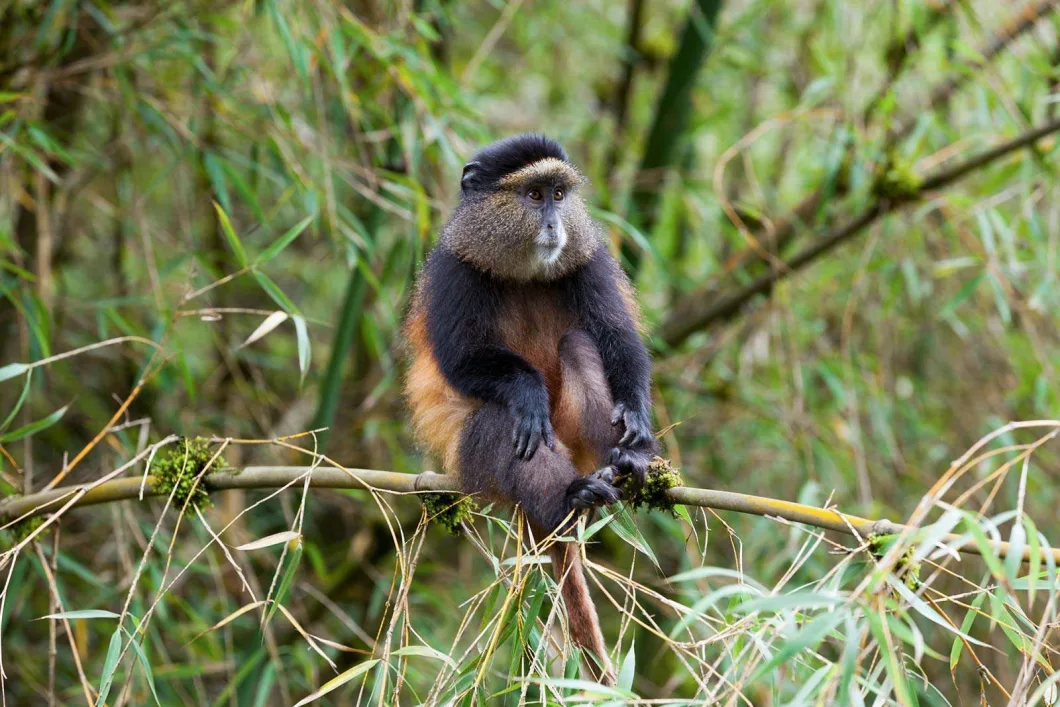
Tucked into the bamboo-covered slopes of the Virunga Massif, Volcanoes National Park in northwestern Rwanda is home to one of Africa’s rarest and most charismatic primates: the golden monkeys. Playful, energetic, endangered, and endlessly entertaining to watch, as they leap through bamboo thickets offering visitors an experience that rivals — and often complements — Rwanda’s famous mountain gorilla treks.
But because the park’s weather changes from season to season through out the year, planning your visit well can make the difference between a smooth, rewarding hike and a muddy slog through the forest.
This guide breaks down Rwanda’s seasons, explains how they affect golden monkey behavior and trail conditions, and helps you decide when to plan your adventure.
Rwanda’s climate and why it matters
Volcanoes National Park sits at high altitude, which keeps temperatures cool and comfortable year-round as it close to the equator. Mist and cloud cover are common regardless of season, but rainfall variations are enough to shape the entire trek into a unique experience.
Rwanda’s year splits into four broad periods:
Long dry season: June to September
Short dry season: December to February
Long rainy season: March to May
Short rainy season: October and November
These cycles influence everything from trail conditions to how far you’ll need to hike to find a troop of monkeys.
Dry Season: June–September and December–February
For most travelers, the dry months are considered most convenient for golden monkey tracking.
From June to September, little or no rain is received, so forest paths are firm, dry, and much easier to stroll on.
Golden monkeys tend to stay busy in the bamboo canopy during this part of the day, making it easier and interesting for watching and have better photo chances as the light is good.
However, this is Rwanda’s busiest tourist season, so lodges fill up fast and permits need to be reserved well in advance.
December to February is considered a short dry season though more visitors appear for the activity. It still rains sometimes, but the showers don’t last long.
During this time, the leaves are smaller, which can make it easier to see monkeys moving through the forest.
Many tourists also prefer this time of year because it has less crowds compared to the peak summer season, so the trails are still in good shape.
Rainy Season Trade-Offs: March–May and October–November
The wetter months, March to May and October to November, come with heavier and more frequent rainfall, which softens trails and can make hiking more physically demanding.
However, these seasons provide conditions for specific travelers due to its advantages and disadvantages.
As bamboo shoots sprout at lower elevations, golden monkeys often descend closer to the park boundary to feed, which makes considerably shorter compared to the dry season.
With a greener vegetation cover, photographers find an appealing atmosphere.
Rainy periods tend to attract fewer visitors, meaning quieter trails and more relaxed, personal encounters with the monkeys.
Accommodation prices often drop as well, since lodges compete for the smaller inflow of travellers willing to withstand the muddy conditions Discounted rates are always offered.
For budget-conscious visitors or those who prefer solitude over convenience, this can be an appealing time.
Month by month – brief breakdown
| Period | Season | Trail Conditions | Monkey Visibility |
| December–February | Short dry | Moderately dry, firm and clear | Excellent |
| March–May | Long wet | Slippery and muddy | High on lower slopes |
| June–September | Long dry | Dry, firm and clear | Excellent |
| October–November | Short dry | Moderately muddy | High on lower slopes |
Golden monkeys can be found and tracked all year round. What changes is not whether you’ll see them or not, but how comfortable the hike is and how long you have to walk before finding them.
What the golden monkey trek involves.
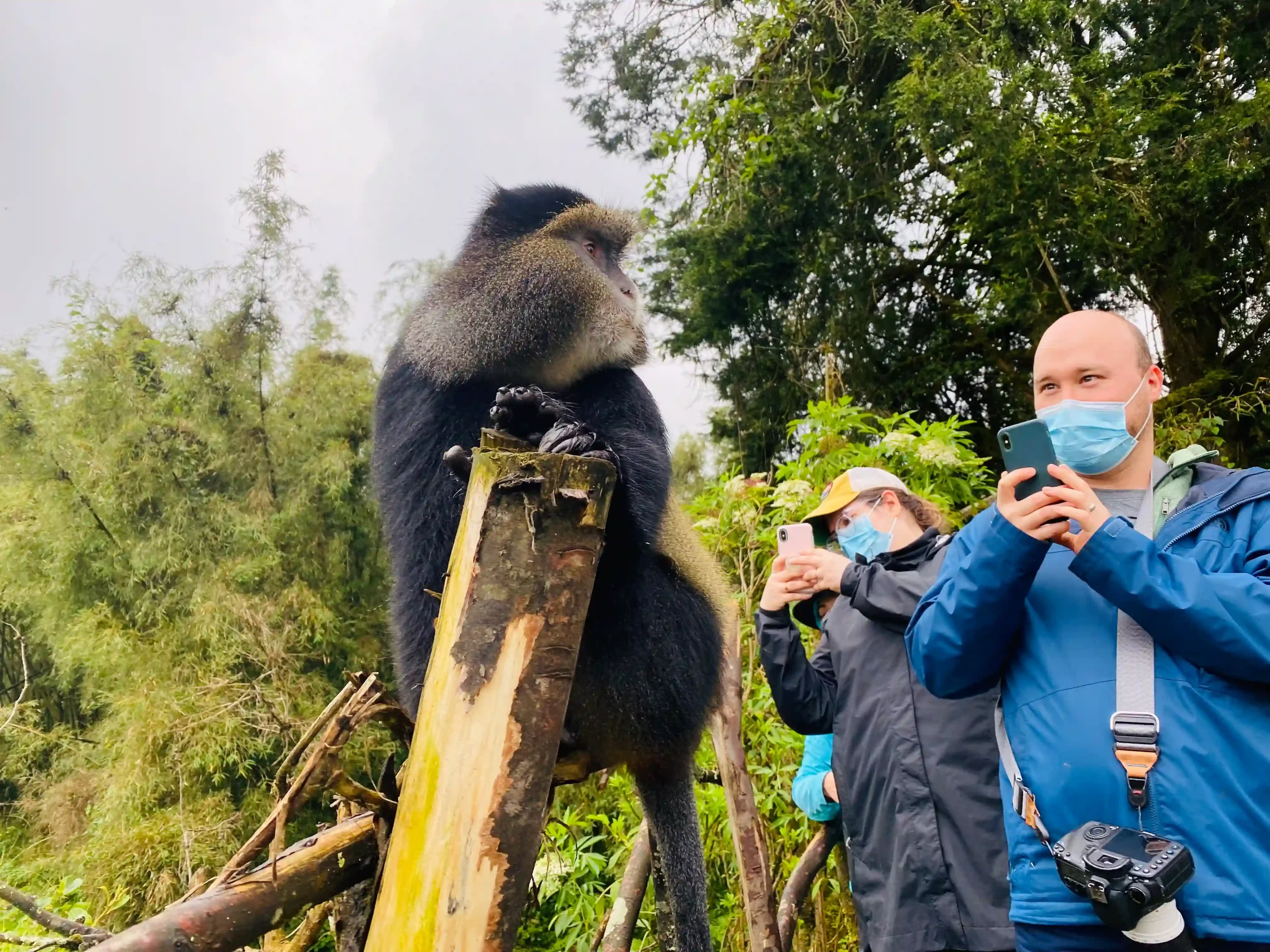
Golden monkey tracking begins early, with visitors gathering at Kinigi Park Headquarters for a morning briefing from park rangers around 7:00 AM. After group allocation, groups travel by vehicle to the trailhead. The hike itself can range from two to four hours, depending on where the troop is spotted. Once found, visitors are given a full hour to watch and take photos of the monkeys in their natural home. Because these troops are well habituated to human observers, they carry on with normal behavior — grooming, chasing each other through the branches, and foraging, freely and unbothered by human presence.
Essential packing for the golden monkey trek
Whichever season you choose for your visit, a few essentials make the hike far more unique and comfortable:
- Waterproof hiking boots with solid ankle support
- Long sleeves and lightweight trousers to guard against nettles
- A rain jacket or poncho, even in dry season
- Gardening-style gloves for gripping branches on steep sections
- A camera with a fast shutter speed, since monkeys rarely sit still
Pairing your golden monkey trip with other Rwandan adventures
Most of the time, seeing golden monkeys is just one part of a longer trip through Rwanda. A significant number of people who visit volcanoes national park seeks to trek mountain gorillas too. From this park you can proceed to Nyungwe National Park to see chimpanzees in the misty highland forest, go on Classic savanna game drives with the Big Five are what you can do in Akagera National Park, which is in the eastern part of the country or any cultural encounter. With these other stops, it’s easy to make a full Rwandan adventure out of just one golden monkey trip.
see you well on your way to an unforgettable encounter with one of Africa’s most delightful primates.