
Best time for camping safaris in Rwanda.
Rwanda camping safaris are one of the best ways to witness the wild beauty in the Land of a thousand hills. You’ll be right in the middle of famous rolling landscapes when you camp in Rwanda’s only savanna park, Akagera National Park. other parks too have camping sites though not within the park premises but so close. You can stay in canvas tents instead of hotel walls within or outside the park. In the morning, you can wake up to the sounds of wildlife and the light of an African sunrise. Whether you’re on a tight budget or looking for a high-class tented adventure, camping in a ground tent, rooftop tent mounted onto a 4×4 vehicle in the park provides a memorable wilderness experience.
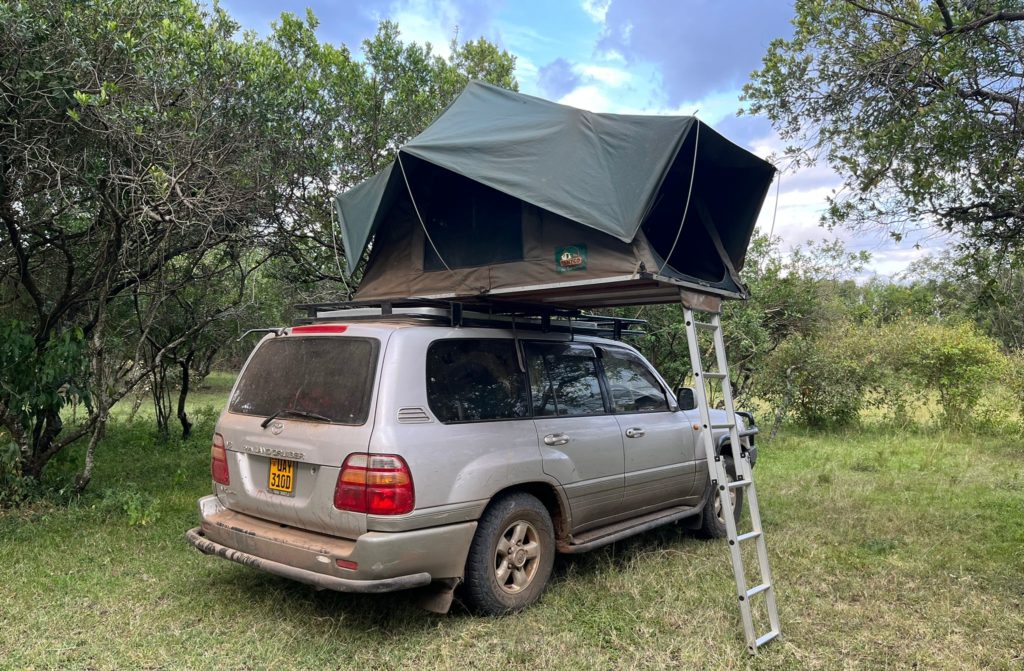
Camping sites in Rwanda have permanent locations unlike in some countries like Kenya and Tanzania where some camping sites are mobile following the flow of the wildebeest migration.
Anyone who has gone camping before tented will testify that this is one of the few adventures that allows you to truly connect with nature. Camping in Rwanda is good for your physical and mental health since it helps you to meet and relate new people, learn new skills, connect with nature.
Though Rwanda has good camping sites, it lies on the tropical zones close to the equator. The climate is characterized by seasonal rain fall and sunshine, hence the time you wish to visit for a camping safari is largely determined by the weather, your interests and budget.
Below is an elaborative description of the weather conditions per month in Rwanda as a base for you to determine which time to travel.
June to Mid September
This is the long dry season and the most popular time for Rwandan safaris. This time is considered best for outdoor and recreational activities. rain is rare though in some areas close to the rain forest parks like Volcanoes and Nyungwe National Park, may receive less showers in some hours of the day.
The skies are a clear blue, and the temperatures pleasant. There is a reduced malaria risk in this season due to limited vegetation growth, and the wildlife can easily be spotted, park tracks/trails more accessible, hence less risk of getting stuck in the mud or having your ground camping tent filled with water.
However, this period attracts larger crowds, accommodation and transportation charges tend to be higher due to increased demand for different activities. Therefore, travelers are advised to book some activities like gorilla tracking and accommodations in advance to avoid competition.
December to February
This is an alternative dry season, favorable for visiting Rwanda and embarking on camping adventures. This season is short and dry but conducive for travel. This season has short rain showers but a perfect time for spotting wildlife.
March to May
These months are considered the wettest of the year, with strong and persistent rains though tourism activities still go on as different people have different intentions of travelling. If you don’t mind the rain, plan to travel during this time as it has good reasons that render it suitable for safaris.
To some, this is the worst time to go camping in Rwanda, but to birders, its the best time due to the presence of a variety of migratory bird species and the best breeding time.
This period attracts less crowds thus convenient for travelers who wish to enjoy personalized moments and in door activities.
The vegetation is always lush green and dramatic, perfect for photography and calm /quieter experiences.
During this time, different accommodations/ camping sites, provide discounted accommodation charges, making it possible for low budget travelers to enjoy less costly stays.
If you wish to travel in the rain season, you are advised to pack the right water proof gear, rent a good 4×4 vehicle with high ground clearance to help you navigate the slippery terrain, opt for a roof top tent or a well-structured tented accommodation.
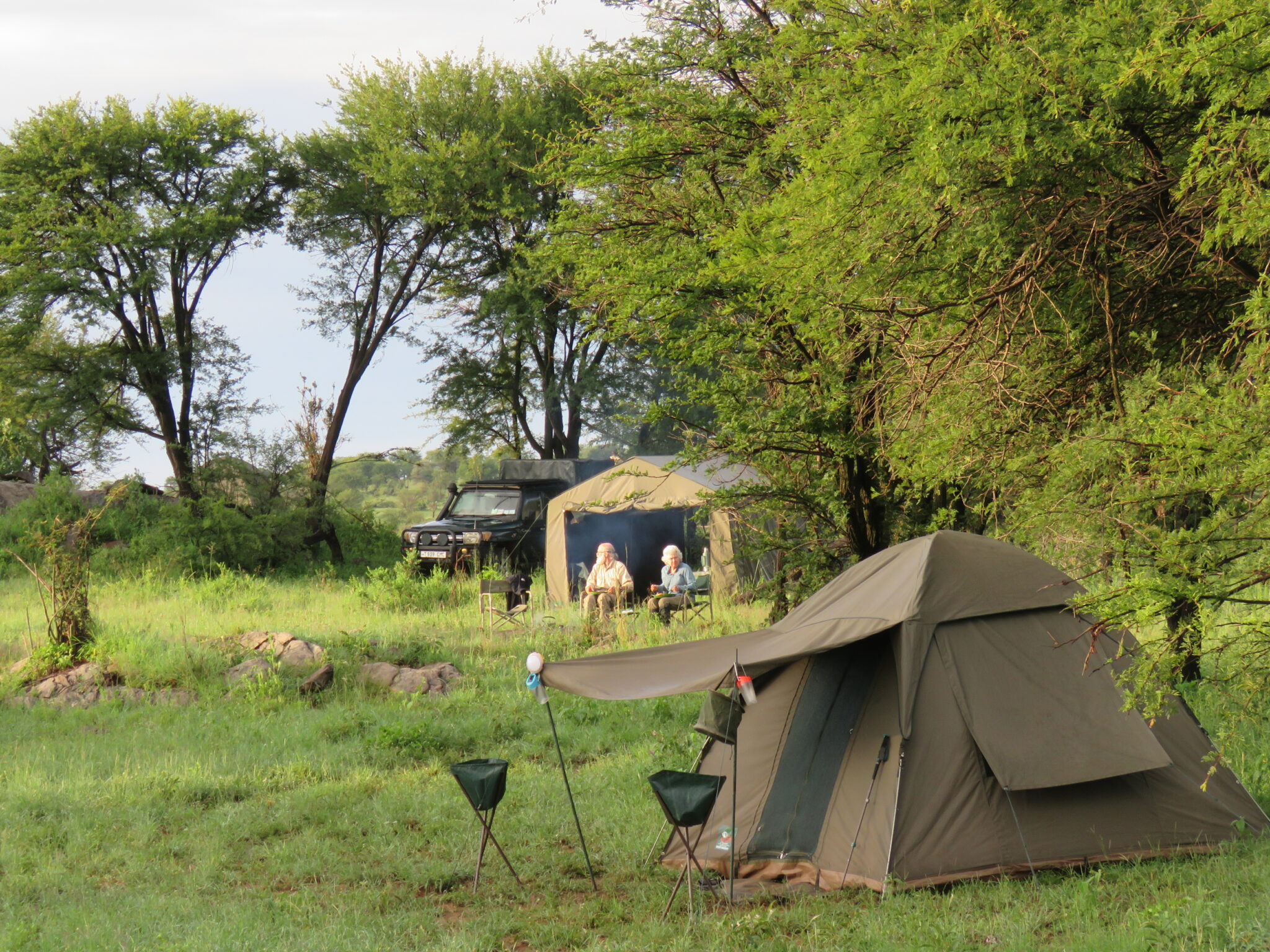
Frequently asked questions about camping in Rwanda.
What is safari camping?
Safari camping is an outdoor adventure setting up a tented home in the wild. Camping is sub divided into 3
Basic camping: This is a situation where travelers must come with their camping equipment and often reside inside of close to the park
Tented camping/ Luxury camping: This camping involves sleeping in permanent or semi permanent canvas tents with beds, bathrooms and some have electricity. Such camps are commonly found inside the national park.
Mobile camping: these are camps that can be moved from one place to another depending on the flow of wildlife. Each night, such camps change locations.
Is camping possible in Rwanda?
Yes, camping is possible in Rwanda. Rwanda has 3 main national parks, all of which offer camping options either inside or outside the park.
Akagera national park has designated camping sites including Muyumbu, Shakani, Mutumba and Mihindi. At these sites, travellers are only provided with space and other outdoor facilities like toilets, bathrooms, water and a fireplace. Campers must come with their camping gear and food or be ready to buy from the hotels inside the park.
Akagera national park also offers luxury camping at Ruzizi tented Lodge and Magashi safari camp. these provide basic facilities similar to those in block accommodations.
Volcanoes national park does not have camping sites inside the park but some accommodation outside the park offer camping grounds to back packer. Some of the camping facilities include Kinigi campsite, Red rocks camping site, and Bisoke Beer garden campsite.
Nyungwe national park offers camping at Uwinka park center reception, wilderness camping along the hiking trails, and along the Congo- Nile trail.
Is camping safe in Rwanda?
It is safe to camp if you follow the park rules. Many campsites are inside national parks or close to the parks, which makes them safer. The camping sites are watched over by trained guides and staff. Campers are warned not to walk around at night, stay away from loud noises, and always zip up their tents.
Camping grounds are always fenced with electric barbed wires to protect from wild animal attacks.
Wildlife may be close to camps, but they usually don’t pose a threat unless they are scared. For safety, you must listen to your guide.

Is food provided at the camping sites?
On a guided camping safari, guests are provided with meals at communal dinning tables while self drive campers are advised to come along with their own food and share the public facilities.
Are children allowed on a Rwanda camping safari?
Yes, children are allowed on a Rwanda camping safari though some ages are restricted from certain activities. Children below 12 years are not allowed to participate in game drives and nature walks. families travelling with children, are advised to camp in tented lodges that offer family rooms.
Do camping sites have charging devices?
Some camping sites/ tented lodges like Magashi have solar power and a stand by generator that can be used for charging while in other camping sites, travelers are advised to carry extra batteries depending on the time they will spend in the park, yet others come with solar lanterns and torches and portable solar charging equipment and a power bank.
What should I pack for a Rwanda camping safari?
For a Rwanda camping safari, travelers are advised to carry the following items, pack neutral-coloured, lightweight clothing like long-sleeved shirts and trousers, a waterproof jacket, and warm clothing like sweaters and jacket for chilly evenings. A good camera with extra batteries, binoculars, a first-aid kit, sunscreen, and sturdy hiking boots and insect repellents. Remember to pack toiletries, a flashlight or headlamp, and a hat for sun protection.
If you are not camping in a tented lodge, come along with a ground or roof top tent, sleeping bags, mattress, some kitchen utensils, camping chairs and table, gas can refillable water bottle and food.
Camping safaris offer exposure to natural wilderness beauty, excitement and proximity. Simple tents or luxurious camping, provide a unique experience. Proper preparations coupled with guidance make a wonderful opportunity to experience the heart of Africa.