
Rooftop Tent vs Ground Tent: Which Is Best for Your Camping Trip?
Few decisions shape a camping trip as much as where you sleep. Rooftop tents have become a common sight on four-wheel-drive vehicles, promising fast setup and a comfortable bed. Traditional ground tents remain the favourite of hikers, families and budget-conscious campers. Both work well, but they suit different travelers and provide a comfortable night outdoors, but they suit different kinds of camping trips. The right choice depends on how often you camp, where you travel, how many people are coming with you, your budget and whether you want your vehicle to remain available while you are at camp.
This guide compares the two on setup time, comfort, cost, durability, weather, safety and lifestyle, so you can choose with confidence
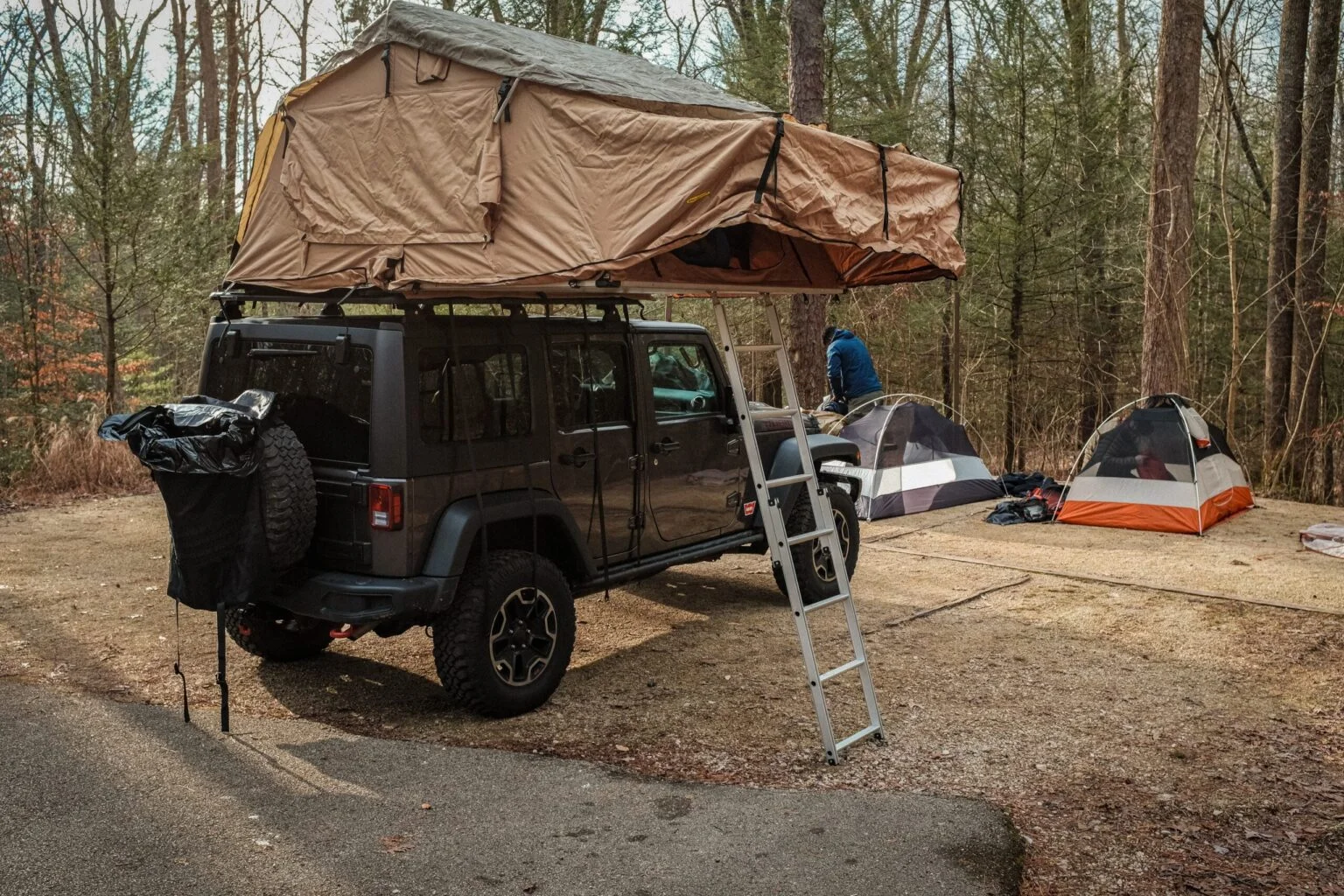
Set up and take down time
One of the biggest attractions of a rooftop tent is speed. Many hard-shell rooftop tents can be opened well in a few minutes, while soft-shell models generally take several minutes. You unzip the cover, unfold the ladder, extend a few support poles and you are ready to sleep in a few minutes, on a bed that stays flat whatever the ground is like. Because the mattress and other bedding can remain inside, and there is less equipment to unpack each evening.
A quality hub-style ground tent is closer than most people think. The frame can pop into shape in under a minute. The extra time goes on finding a flat, clear spot, staking the tent down to avoid any destructions in case of weather changes. In a straight race the rooftop tent always wins, but in real conditions the gap is small.
Comfort and Sleep Quality
Rooftop tents usually come with a built-in high-density foam mattress, so your bed is always ready and lifted away from cold, insects and a lumpy ground. The trade-off is headroom. Most people cannot stand inside, so dressing means sitting and wriggling into your clothes.
Ground tents are often more spacious and give you room to stand and let you choose your own sleep system, whether that is a cot, a sleeping pad or a full mattress. A large family tent can provide separate sleeping areas and enough room for several people, something that can be difficult to achieve with a rooftop tent. However, you are closer to the ground, so a levelled and dry site matter far more to a good night’s sleep.
Cost (affordability)
A basic or good-quality ground tent can cost anywhere from around $500 to several hundred dollars, depending on the size, materials and design. Larger family and specialist four-season tents can cost considerably more.
Rooftop tents start at about $1,500 and can pass $4,000 for larger, better-equipped models. Many vehicle roofs cannot carry that weight, so a heavy-duty rack system may add another $500 to $1,500. The good news is that rooftop tents hold their resale value well, so the investment is not lost. Even so, the upfront cost is in a different category.
For occasional campers, a ground tent therefore offers a relatively cheaper and easier way to get started. A rooftop tent makes more sense financially when its convenience and frequent use justify the additional investment.
Durability and maintenance
Durability depends heavily on the quality of the particular tent rather than simply whether it is a rooftop or ground model.
Rooftop tents are commonly built with sturdy fabrics, reinforced frames and, in hard-shell models, rigid protective outer shells. Because they are stored above the ground when packed, they avoid some of the mud, dirt and moisture that ground tents encounter.
However, rooftop tents are exposed to different like strong elements sunshine and rain whenever they are mounted on the vehicle. Their hinges, mounting hardware, fabric and seals need regular inspection, particularly after long journeys on rough roads.
Ground tents can also last longer when properly maintained. Their main challenge is direct contact with the ground. Sharp stones, wet soil, tree branches and poor packing can damage fabric and flooring. Allowing a wet tent to remain packed away can also lead to mould and unpleasant odours.
In either case, careful cleaning, drying and storage are important for extending the life of the shelter.
Safety recommendations
Before mounting a roof top tent to any vehicle, campers should check the vehicle manufacturer’s roof-load limits and ensure that the roof rack is designed for the tent. The important figure while driving is the vehicle’s dynamic roof-load capacity.
Rooftop campers should also take care when climbing the ladder, particularly in rain or darkness. The vehicle should be parked on a stable surface, and the tent should be properly secured before use.
Sleeping above the ground keeps you clear any floods, insects, snakes and small animals, and this is what makes many people feel safer in such a tent.
Ground tents eliminate the need for a roof-mounted sleeping system and are generally simpler to access. Their safety, however, still depends on campsite selection. Campers should avoid areas prone to flooding, falling branches, rockfall or other environmental hazards.
However, neither tent is automatically safe in every situation. Good camp selection and proper equipment use remain essential.
Weight, Cargo Space and Fuel Economy
Because a rooftop tent lives outside the cabin, it frees space for coolers, recovery gear and clothing on long trips. The cost is felt in driving. A typical soft-shell model weighs around 160 pounds and sits at the highest point of the vehicle. This raises the centre of gravity, which you notice on uneven trails, and it increases wind noise and fuel use on the highway.
Ground tents are more flexible. Packed inside, they take up cargo space but leave mileage untouched. Many now come with weatherproof roof-rack covers, so you can strap them up top for a big trip and keep the cabin clear.
The Camping Style (flexibility)
For many vehicle owners, this is the point that settles the choice. With a ground tent, you set up a full camp of tent, chairs and kitchen, and leave it standing. Your vehicle is free to explore trails, visit viewpoints or fetch supplies.
A rooftop tent is fixed to your vehicle. Every time you drive off, even for a 30-minute trip, you must fold the tent and secure the cover, then repeat the setup on return. For some travellers that is a benefit, because it suits a nomadic trip where camp moves every day. If your plan is to park, settle and explore, a roof-mounted bed works against you.
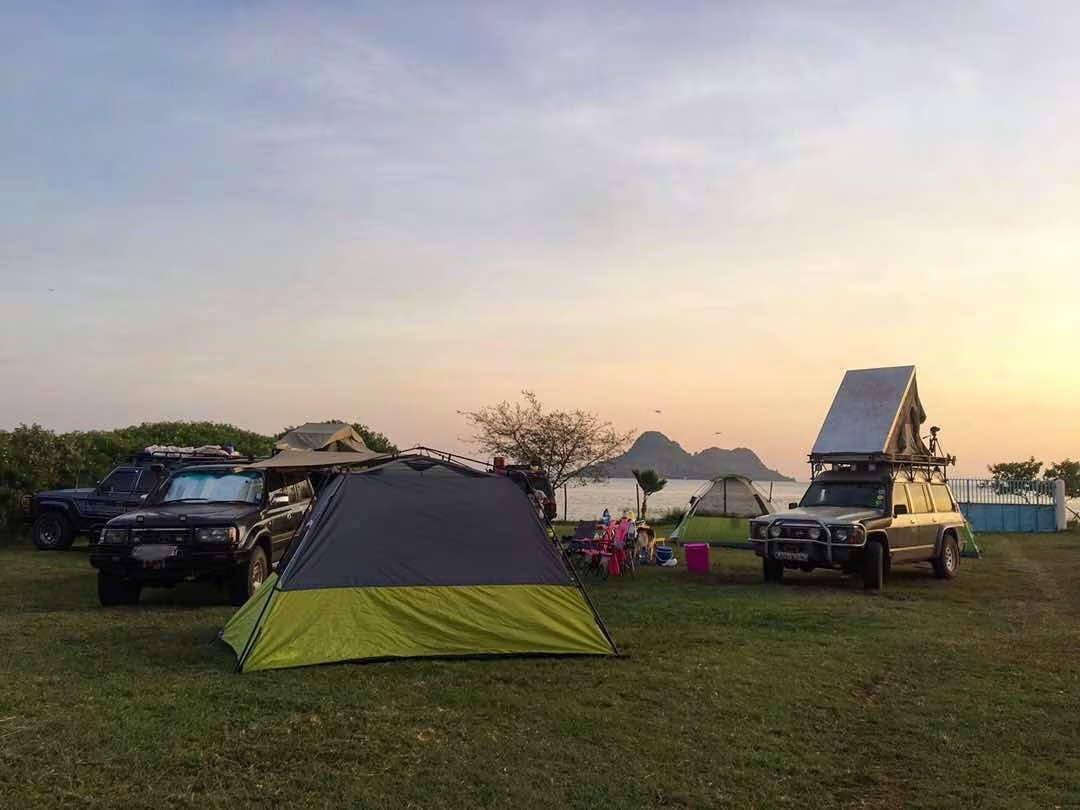
Who chooses which type?
Rooftop tents are particularly popular with self-drive tourists, off-road adventurers and explorers who move camp often. Couples and small families like the fast setup and comfortable bed, and many enjoy the elevated view.
Ground tents are favoured by hikers, families, large groups and anyone staying several days in one place because they offer more space, are easy to share between vehicles and suit occasional campers and tight budgets. they can even be carried to a campsite that can be reached on foot , something that cannot be done with roof top tents that require a vehicle.
So, which one suits your camping trip?
There is no single answer for every traveller.
Choose a rooftop tent if you travel by vehicle, change location often, value fast setup and a ready bed, and have the budget and a suitable roof rack. It rewards road-trippers and remote explorers who want camp to move with them.
Choose a ground tent if you plan to stay in one place, camp with a group, want standing room, or would rather spend less. It is also the better fit if you want your vehicle free for day trips.
Neither option is better in every situation. The best tent is the one that matches your route, your group and your budget. Think about how you like to travel, and the right choice usually becomes clear when you are buying or booking with a rental company.
Warning: Trying to access array offset on value of type bool in /home/selfdri1/public_html/wp-content/themes/flatsome/inc/shortcodes/share_follow.php on line 41
