
Frequently Asked Questions About Mountain Gorillas
Mountain gorillas are rare, wild, and exciting species(considered endangered) that have attracted many travelers, researchers, learners, and conservationists to the wild to obtain deeper knowledge about them. They are fascinating human cousins that share 98% of human DNA. There are estimated to be 1063 remaining mountain gorillas in the world, thus the desire for nature lovers to have e memorable life experience in their natural habitat.
What are mountain gorillas?
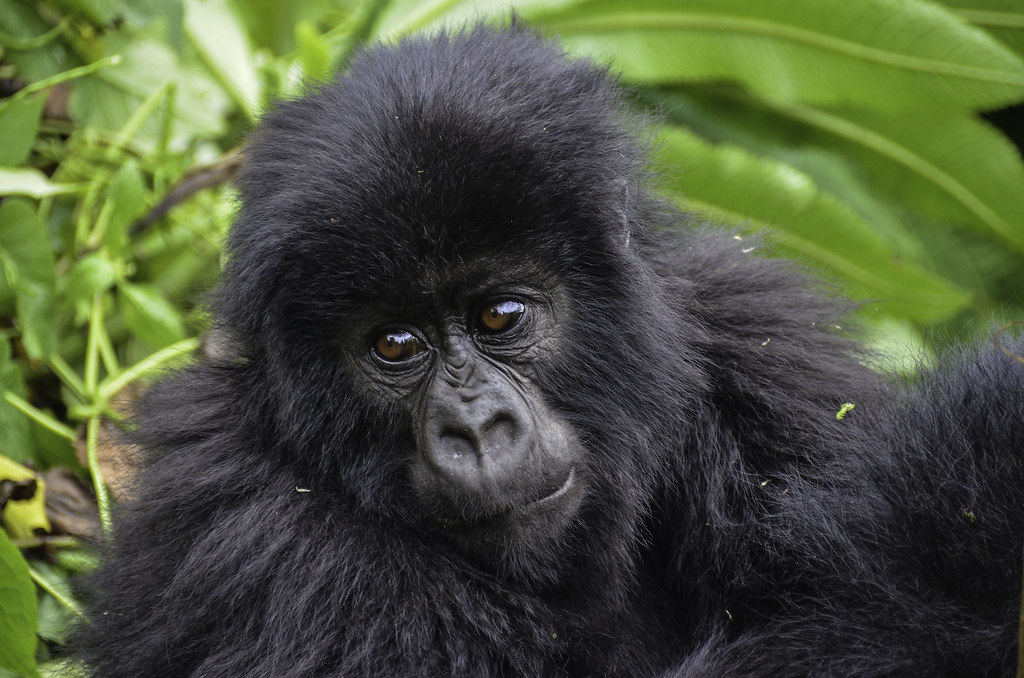
Mountain gorillas are endangered species of the great ape. They are a subspecies of eastern gorilla. As their name states, they reside in the high highlands at elevations ranging from 8,000 to 13,000 feet. In the wild, mountain gorillas live in families, with the leadership of the dominant silverback.
What is the scientific name for mountain gorillas?
Mountain gorillas are scientifically referred to as gorilla beringei beringei.
Where are mountain gorillas found?
Mountain gorillas are mainly found in two destinations that is, Bwindi Impenetrable National Park in Uganda and the Virunga Conservation Area that covers a chain of volcanic mountains across Rwanda, Uganda, and the Democratic Republic of Congo. Bwindi Impenetrable National Park houses over 459 mountain gorillas, a population almost half of the world’s total mountain gorilla population in 22 social groups. The global total population of mountain gorillas is 1068 individuals.
For how long do mountain gorillas live in the wild?
Mountain gorillas’ life spans for 35 to 40 years in the wild. In captivity, they can survive up to 50 years
What is the general behavior of mountain gorillas?
These endangered apes are tremendously social and live in groups commonly referred to as families. They live in groups of 2 -40 individuals, and each group is led by a dominant male called a silverback. Mountain gorillas are shy, gentle, but they become aggressive once threatened.
What do mountain gorillas feed on?
Mountain gorillas are herbivores, and their diet is mainly composed of plant life. This includes fresh leaves, shoots, vines, grass, and stems. These make up 86% of the diet, 7% is from edible roots, and 5% from fruits and flowers. Gorillas also feed on small insects like ants, grubs, and snails.
How much food do mountain gorillas eat in a day?
Male mountain gorillas have the capacity to consume between 34 -45 kilograms (75-100 pounds) of vegetation daily, while females can ingest between 18 -23 kilograms (40-50 pounds) each day. These vulnerable primates barely partake in the consumption of water; instead, they rely on the juices from fruits and fresh plant leaves.
How do humans see mountain gorillas?
People come to meet mountain gorillas through the gorilla tracking and habituation experiences in their natural habitat. Gorilla tracking allows humans to stay in the presence of the mountain gorillas for one hour in all the mountain gorilla parks, that is, Bwindi Impenetrable National Park, Mgahinga National Park in Uganda, Volcanoes National Park in Rwanda, and Virunga National Park in DR Congo. In the gorilla habituation experience, people are allowed to witness the gorillas for 4 hours, and this experience is only offered in Bwindi Impenetrable National Park.
What is the mountain gorilla tracking experience?
Mountain gorilla trekking experience is a typical wildlife experience, and a once–in–a–lifetime event that offers wildlife enthusiasts a memorable encounter with the gentle giant apes in their natural home. It is a challenging but rewarding opportunity that involves walking for some hours in the wild with the leadership of trained park guides and rangers until you meet a specific gorilla family. Once you find it, you are allowed to stay with it for one hour and enjoy their behavior in the wild.
What is the cost of the gorilla tracking experience?
Gorilla tracking in Rwanda costs $1500, in Uganda it’s $800, and in DR Congo it’s $400. Though the costs vary per country, the tracking experience is equally rewarding in all destinations.
What is included in the gorilla permit cost?
It includes the park entrance fees and the gorilla tracking activity only.
What is the age limit for gorilla tracking?
Only people of 15 years and above are allowed to participate in gorilla tracking.
What is the best time for the gorilla tracking experience?
The endangered mountain gorillas live in the tropical rain forest, so it’s always a wonderful idea to visit them during the dry months of the year when the hiking paths are dry and easy to navigate! (June to September and December to February). However, it’s not a guarantee that there will totally be no rain in the dry season because rainfall is unpredictable in a tropical rainforest.
Mountain gorillas can also be visited in the wet season, provided you’re strong enough to walk along the slippery terrain. The wet season is also best for birding and photography, so you can combine gorilla tracking with other wildlife activities. Get to enjoy discounted transport and accommodation costs too in the wet season.
What should I pack when going for gorilla trekking?
For your next gorilla trekking safari, you need to come well prepared with the appropriate gear. You should come along with trousers and long-sleeved shirts (keep to neutral colors), hiking boots that are water resistant, sunscreen cream, binoculars, insect repellent, a camera with additional batteries, a helmet or cap, gaiters, and a light raincoat or poncho. Water and snacks are also essential for refreshment and keeping you energetic along the trek. At the park, you will be given hiking sticks.
What are the chances of meeting mountain gorillas during the trek?
Because the mountain gorillas are visited daily by researchers or trekkers, park guides and rangers have a good idea of where each family is, and you have a 99% chance of seeing them on your trek.
Can I get close to mountain gorillas during the tracking moment?
The trekking guidelines state that you can only spend an hour with the gorillas for the gorilla tracking experience and 4 hours for the habituation experience, and that you must always stay 10 meters away from them. Gorillas may come closer to you if they are interested. If this happens, stay calm and quiet, don’t run, listen to your guide, never touch the gorillas, and avoid direct eye contact with the gorillas. A backward movement gives the gorillas more comfort, and you, as a trekker, get a better viewing perspective.
How difficult is gorilla tracking?
Going trekking is a real challenge that involves having a particular dressing for the weather, walking through thick vegetation, muddy paths, and lush jungles. Because of the persistent rain and mist, and muddy trails, hiking could be unpleasant, but with the hired porters who help to carry your daypacks and photography gear, and your ranger guides will make every effort to lead and guide you through the trek, its always amazing and great success. Altitude sickness is usually not an issue, especially if you spend a day getting used to the area close to the park before your gorilla hike. Packed water and snacks will be of great help to enable you to get rid of altitude headache and hunger.
Get ready to hike for at least 5 hours, but this depends on where you locate the gorilla family. Some trekkers can walk for only 30 minutes, while others spend up to 6 hours. You are advised to visit a medical attendant for a check-up up especially with the respiratory problems and always carry prescriptions.
If you are physically unwell, request to be allocated for a short or medium trek. If disabled, you are advised to book a sedan chair in advance through your tour operator.
How safe is gorilla tracking?
The gorilla tracking experience is generally safe, though there are some risks to keep in mind. That’s why tracking rules and regulations are so strict. You must pay attention to your guide and follow the park procedures; you’ll be in excellent condition for the gorilla tracking experience.