
Things you wish to have known before your first self-drive safari to East Africa.
When you plan a self-drive safari into the African wilderness for the first time, all your expectations are about an amazing adventure that combines amazing wildlife encounters with deep cultural immersion and real conservation effect. In the end, a self-drive safari can help the community you meet, be friendly with them, as you get closer to nature. s
Are you trying to find a safari at a lower cost than package tours? Do you want a customized experience free from the pressures and demands of other group members? Or perhaps you are simply seeking an exciting way to travel across the eastern part of Africa. In any case, the smartest choice is a self-drive road trip.
This guide will help you plan with confidence and purpose, from choosing the right destinations for your trip, accommodation style, understanding how to get there, the right time to visit, and what to pack.

Visa information and personal travel documents
If you decide to start your trip in Kenya, you need to apply for an ETA, which is valid for a single entry into Kenya. The East African visa is valid in Uganda, Rwanda, and Kenya. In Tanzania, you must apply for its Visa, and this can be done on arrival. If you do not begin your trip in Kenya, you can use the East African visa and the Tanzania Visa. The price of the of the Visa varies depending on the country. You should have a valid passport with at least three free pages and three months to its expiry date.
Cross-border documentation.
Most rental agencies do not allow automatic cross-border use. They do not allow some vehicle models to cross into different countries due to differences in terrain. You must find a tour operator with regional partnerships, multi-country coverage, and has specific vehicles that can make round-trip trips across East Africa. 4×4 safari Land Cruisers are most convenient.
The vehicle should have the correct paper documentation, including vehicle temporary entry permits, insurance extensions (COMESA Yellow Card), third-party insurances or other customs charges. Stamped authorisation letter from the rental agency, the car logbook, and border clearance forms. Ask for a full breakdown of all the costs before confirming your rental.
Choosing the right destination
East Africa is greatly endowed with sweeping savannas, wetlands, and forested zones that offer thrilling experiences not nature lovers. As a first-time traveller, choosing a tourism destination for your East African adventure largely depends on what you hope to discover.
If Wildlife is your major interest, the popular Serengeti National Park in Tanzania and the Masai Mara National Park are the best spots as they are highly recognised for hosting the big five and the great wildebeest and zebra migration across the vast savanna plains.
More popular wildlife encounters are in Uganda, Rwanda, and DR Congo, where travelers get a memorable opportunity of getting close to the human cousins, endangered mountain gorillas in the Virunga conservation Area and Bwindi Impenetrable National Park. These countries are also home to other rare primate species, including chimpanzees, baboons, and several monkey species.
Different East African tribes have different cultural and traditional exhibits in their respective designations, but the most popular are the Maasai tribe in Kenya and Tanzania, the Baganda and Bakiga in Uganda, and the Banyarwanda in Rwanda.
You can make a trip that feels meaningful, personal, and memorable by figuring out what’s most important to you, whether it’s wildlife, scenery, or learning about other cultures.
Choose the right safari experience
Your interest greatly determines your connection with the landscape, wildlife, and local culture.
Game drives are a common means of getting close to nature. While in a safari park with your 4×4 safari vehicle, you will traverse the varying terrain in the different East African savanna parks. You will be able to see a range of wild animals, including the big five and more species like elephants, zebras, giraffes, warthogs, duikers, crocodiles, hippos, antelope species, and many more. Sighting wildlife in national parks is always rewarding with the help of a park guide who knows the best spots and provides protection from any wild animal attacks.
Boat safaris in East Africa are so rewarding on lakes like Lake Victoria, which is shared by Uganda, Kenya, and Tanzania, Lake Kivu and Lake Ihema in Rwanda, the Kazinga Channel in Uganda, and many other water bodies within the region. These places are best for watching hippos, crocodiles, and various bird species.
Though on a self-drive safari, you may decide on a walking adventure. This will immersively connect you to the local community, where you get to learn how the locals in a particular tribe in an area behave, spend their day-to-day lives, and their culture and traditions. Nature walks can also be conducted within the park to observe smaller wildlife creatures that cannot be seen during game drives and cruises. Such walks are always led by park or local community guides for more knowledge and safety.
Some safari parks offer the hot air balloon experience, which offers aerial views of the park’s vegetation, wildlife, and the untamed landscapes. This activity is commonly offered in Serengeti National Park, Tarangire National Park, Ngorongoro Conservation Area, and Ruaha National Parks in Tanzania, Akagera National Park in Rwanda, Maasai Mara National Park, and Amboseli National Park in Kenya.
Choose your accommodation style.
For a self-drive visitor, comfort is so important for a successful East African safari. With alignment to your adventure choice, you can decide to go camping or stay in lodges/hotels. Most national parks have designated safari camps within and outside the park premises, all of which have convenient facilities. Hotels /lodges offer luxury, midrange, and budget reservations. You can travel solo, with friends, or with family.
Know what to pack for your safari.
Knowing what to bring for your first East African trip helps to make your experience the best. With the right gear, you are assured of comfort, safety, and readiness for anything the outdoors has to offer.
Some of the clothing include: Light, breathable clothing to keep you cool in hot environments, long sleeves shirts and trousers to protect you from direct sunlight and insect bites, a warm jacket for early morning and late evening cold temperatures. You do not need fancy and glamorous outfits, pack comfortable clothes, leave heels and jewelry at home.
Comfortable hiking boots if you wish to engage in hikes and nature walks. Lightweight shoes for simple walks and sandals for relaxing at the accommodation.
A hat, high-quality sunglasses, and sunscreen to protect you from direct sunlight.
Binoculars for viewing wildlife up close, a good camera with a zoom lens, and spare batteries for your photography.
A day pack, reusable water bottle.
Insect repellents, a first aid kit, and toiletries.
Health and safety
Before you set off for your safari, consult your medical attendant for different checkups. Determine the recommended vaccinations for your trip, such as yellow fever and anti-malarial medications. A first aid kit is highly recommended.
Cultural respect
Your East African safari is an opportunity to interact with the locals who have different customs, beliefs, traditions, and behavior. You will feel closer to both people and places if you listen to your guides, follow local rules and customs, avoid taking photos without permission, and keep an open mind.
Be aware of dangerous predators
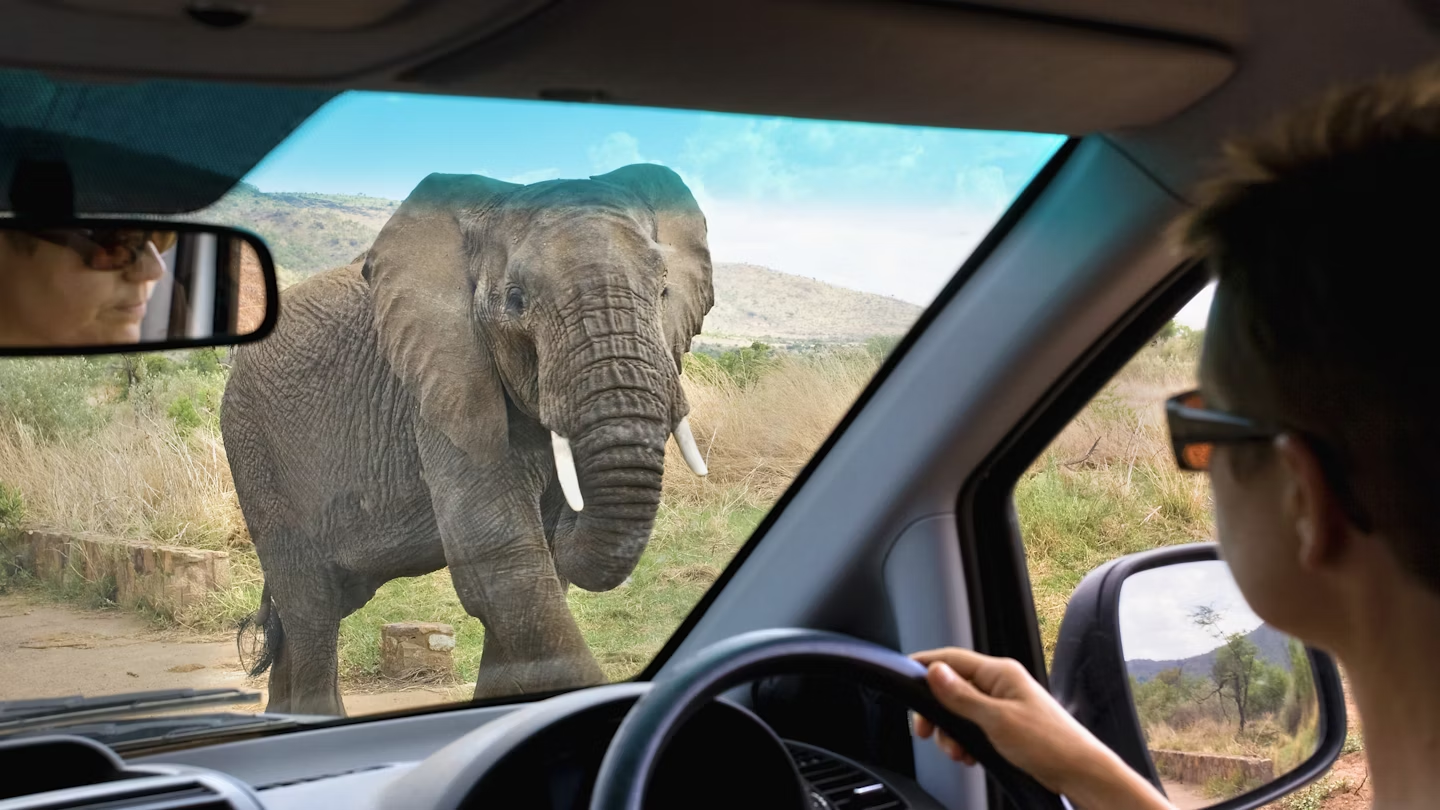
Wildlife often comes closer than you may expect. At times, they see safari jeeps as part of the landscape and are less bothered by your presence. You may find some predators like lions and leopards taking cover under your car, and some elephants and antelopes grazing peacefully at a close range. Others can come close, but do not touch them as their reaction may not be positive.
Some animals have collars. These are not pet/tamed animals – the collars are GPS tracking devices used for tracking these animals, for conservation purposes, and to monitor these animals’ movements to protect them from threats like poaching. This calls for being extra careful while driving in the vast savannahs and always following park rules and regulations, and it’s always good to have a park ranger guide during game drives.
Tips for your self-drive in East Africa
- Take security as a major concern because different people have different behaviours. Don’t leave your valuables in your rented vehicle. Pack in designated and protected areas and make sure your car is properly locked.
- Getting a SIM card for a particular country will help to keep you connected with friends and relatives at home.
- Avoid carrying huge amounts of cash. All East African countries have ATMs and forex bureaus where you can exchange for local currency.
- Gas is an important part of your safari. As a self-drive tourist, you should ask your rental company to provide you with jerricans to carry extra fuel because some roads go through remote areas where gas stations are so rare. There are also no gas stations in the national parks. Always rent safari vehicles with two gas tanks to be on the safe side during your game drives.
- Follow the traffic and driving rules in each country because they differ. For example, in Rwanda, the speed limit is 60 km/hr; once you exceed it, expect fines. Driving in Rwanda is on the right, while in other East African countries, it’s on the left.
- Double-check the rented vehicle before you set off. The service, the spare tyre should match the vehicle, and all the support tools like the jack and wheel spanner should be working well.
- A road map is so important. This helps you to know the places you are passing through because some areas are so remote without internet connections, and the GPS cannot work. Your rental company should provide you with one.
When you know about these attempts, your safari turns into a way to contribute to conservation efforts. Your interaction with wildlife and the East African locals is a connection with a bigger goal to protect Africa’s environmental and cultural heritage for future generations.