
Tent Camping Vs Lodging in Rwanda.
One of the most important choices you’ll have to make when planning your dream African vacation is whether to stay in a tented camp or a safari lodge. Both are distinct, offering different levels of comfort, immersion, and adventure. Knowing the differences will help you determine the option that fits your travel style and specifications.
Camping involves pitching your tent in the great outdoors, either at a designated campsite or far from the usual camping amenities. It’s a chance to get back to nature, avoid the hustle and bustle, and enjoy the great outdoors in a pure, authentic state.
Rwanda offers camping options that are within and close to its national parks. Some of the camping sites include Muyumbu campsite, Shakani campsite, Mihindi campsite, Ruzizi tented lodge, and Mutumba campsite in Akagera national park. Uwinka Campsite, Kitabi Eco-Center campsite, and Gisakura campsite are close to the headquarters of Nyungwe National Park. Redrocks campsite and Bisoke Beer Garden campsite in Volcanoes National Park. All these camping sites have average facilities that enable you to enjoy your wildlife adventure on budget.

Since camping is not for everyone, some travelers opt for self-contained accommodation in lodges and hotels.
Lodging involves staying in a rented accommodation away from home. Lodges are commonly rated according to their amenities and services offered. They usually range from high-end(luxury), mid-range, to budget. Lodging always includes meals and a room to sleep in.
Some of the lodges in Rwanda include Bisate Lodge, One and Only Gorilla’s Nest Lodge, Virunga Lodge, Singita Kwitonda Lodge, Hotel Des Mille Collines, Kigali Serena Hotel, Mantis Akagera Game Lodge, Nyungwe Hilltop View Lodge, Hotel Muhabura, Sambora Kinigi lodge, and Kinigi Guest House, among others.
Pros of camping
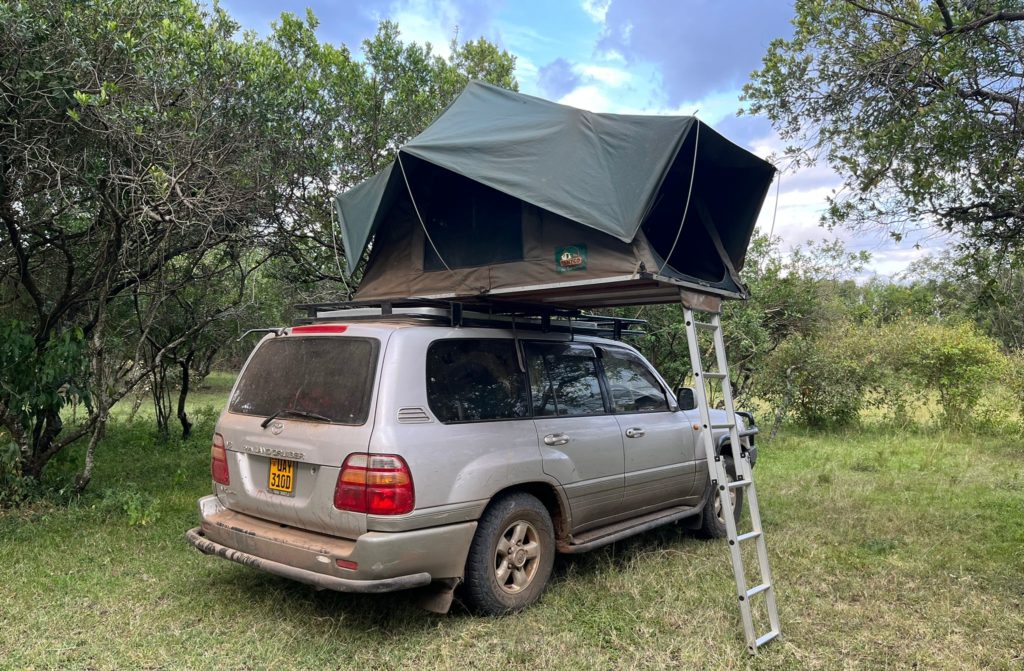
Camping provides an exciting and genuine way to explore the African bush for everyone who wants to be close to nature without compromising comfort. Luxurious tents offer a unique combination of natural beauty and relaxation. Whether spending the night in a luxury tent at a campsite, a rooftop tent, or a ground tent, the wilderness experience is all amazing.
Camping provides ultimate freedom
You don’t have to stay in a particular campsite; you can decide anywhere, say, by the peaceful lakeside, in the middle of a thick forest, or on the side of a rough mountain. This gives you more freedom to make your experience unique and fun.
Connection with nature
Camping enables you to totally lose yourself into the natural wilderness without the interference of contemporary luxuries. You can connect with the environment more profoundly—whether it’s gazing at the clear night sky, listening to the sounds of the forest birds and animals, or waking up to the beautiful sunrise over the landscape, is all awesome.
Cost effectiveness.
Camping is pocket-friendly. If you have all your camping gear, you only need to pay park entrance fees and a small fee for the camping ground. Camp sites always provide free water , washrooms, toilets, and fireplaces. If you opt for tented camping, the resident tents are cheaply rented. This helps you to save but still enjoy an unforgettable outdoor experience.
Challenging but adventurous
Camping involves self-sufficiency because you’ll have to carry all of your gear, at times find your own water source, and negotiate through challenging terrain. This sense of adventure, along with the skills you acquire, can be extremely satisfying.
Cons of camping
Through camping, you are exposed to less insulation against heat, cold, strong wind, and rain compared to lodges.
Though the camping experience is breathtaking, some travellers may find it un safe within a canvas tent as they fear attacks from wild animals.
Camping tents offer limited accommodation. They are profoundly manufactured to accommodate 2 -5 people, thus being insufficient for group travellers like large families, friends, and students on firm trips.
Camping sites have fewer amenities compared to lodges, such as toilets, showers, water, pools, gyms, children’s facilities, and extensive dining options.
Camping is at times uncomfortable as it requires one to carry heavy camping gear, find the right spot for your tent, and deal with insects and other rodents. Such inconveniences can ruin your trip.
However, those seeking a more lavish and well-planned wilderness experience always book safari lodges, which offer all the amenities of a five-star resort on safari. Lodges provide a more sophisticated safari experience with strong construction, large interiors, and a range of facilities that allow guests to have wildlife encounters and later return for rest.
Pros of safari lodges
Lodges are built with long-lasting materials that provide superior insulation and soundproofing. This provides comfort and stability.
Lodges are an excellent choice for families with young children, friends, vacationists, and honeymooners due to their security and services. This helps everyone feel safe and secure.
Most lodges have more amenities like rooms with differently sized beds, fitness centres, pools, gyms, spas, lounges, epicure dining, bars, and ample parking spaces, among others.
Lodges offer a smooth and easy stay with complete amenities like full-time staff, power, free WIFI, leisure activity grounds, and running water.

Cons of safari lodges
The solid walls, though modern and convenient, can deny guests the experience of nature.
Some popular lodges are located in wildlife spots, thus leading to hundreds of vehicles congregating around wildlife, thus leading to animal stress and disrupt predation and migration.
Due to their ability to accommodate more visitors, many people are denied privacy due to the busy atmosphere and concentration of clients.
Many safari lodges are highly priced. Accommodation costs range from $400 to $1500 per night per person. This limits many travellers from accessing them, thus denial from participate in wildlife experiences.
Some accommodations are located in remote areas, which denies guests quick access to the gazetted wildlife sanctuaries. Some are close to wetlands where guests are susceptible to insect bites.
Which accommodation is right for your safari?
Your choice between lodging and camping relies on how much adventure, comfort, and connection in nature you desire:
If you want the best of nature, camping is the best getaway, but if you prioritize modernity and comfort or staying in a more structured environment, then a safari lodge is the best option.
At times, travellers combine both the camping and lodging experiences by starting with camping for wilderness adventures and later lodging for relaxation.
Either way, you’ll have memorable adventures as you immerse yourself in the breathtaking scenery and wildlife of Africa. It is always good to enjoy and respect the natural world around you.
Are you ready for your safari? Contact Active African Vacations for a perfect plan to either stay in a designated campsite or lodging facility.