
Best Time to Visit Volcanoes National Park (month by month)
The Volcanoes National Park, commonly known as Parc National de Volcans (PNV), is the focus for some of Rwanda’s top tourism activities. The park is located in the northern province of Rwanda, covering over 160 square kilometers. The Volcanoes National Park was transformed into an important plant and wildlife protection area in the early 1920s and is part of the large Virunga Conservation Area that also comprises Mgahinga National Park in Uganda and Virunga National Park in the DR Congo, a region that is popular for housing the endangered mountain gorillas.
Volcanoes National Park was more publicised by Dian Fossey, a great primatologist who established the Karisoke research Center and concentrated all her efforts on mountain gorilla protection and conservation.
The park comprises five of the eight Virunga volcanoes, including Mount Bisoke (3,711 m), Mount Karisimbi (4,507 m), Mount Gahinga (3,474 m), Mount Mhabura (4,127 m), and Mount Sabinyo (3,634 m). Due to the variation in altitude, the park holds different landscape features and vegetation zones, like the bamboo in the lower slopes. Hagenia, sub-alpine and Afro-Alpine in higher altitudes. The different altitudinal levels are covered by green forests, mountainous landscape, crater lakes, rivers, and a thriving population of wildlife.
Apart from hosting 30% of the world’s remaining mountain gorilla population, Volcanoes National Park is also home to golden monkeys, forest elephants, buffaloes, leopards, duikers, bushpigs, forest hogs, and many other small and big mammals and several bird species.
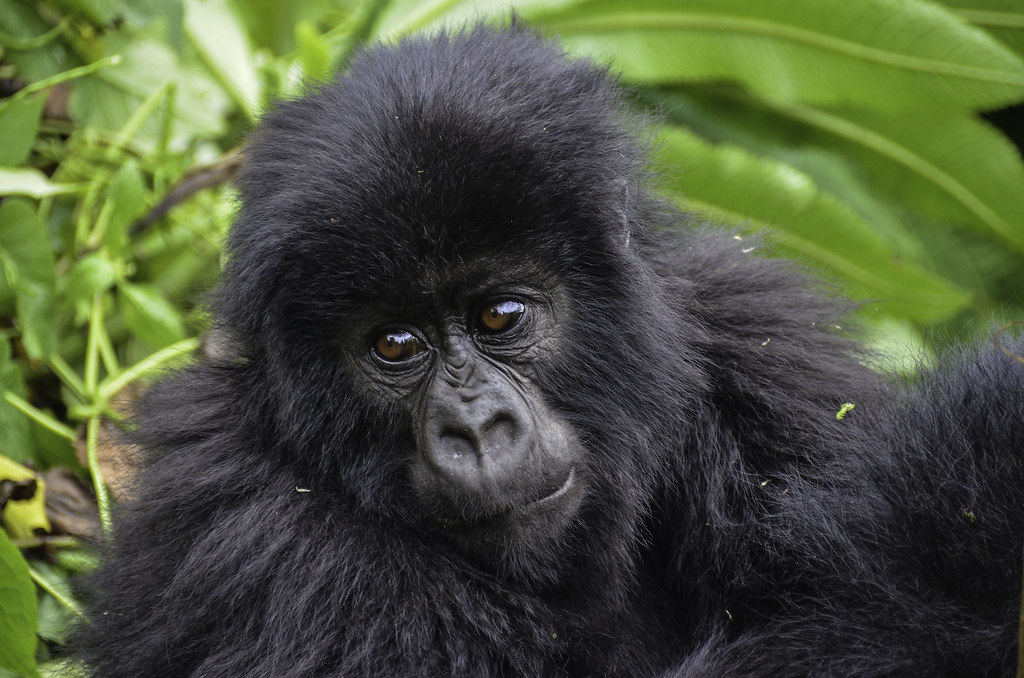
Best time to visit Volcanoes National Park
Volcanoes National Park offers several activities that can be conducted all year-round, including gorilla trekking, golden monkey trekking, hiking the volcanoes, cultural interactions, boat cruises, camping safaris, birding, and many others.
It is possible to visit Volcanoes National Park in Rwanda at any time of the year, regardless of whether it is during the rainy season or the dry season. Weather cannot prevent nature lovers from visiting the park to embark on gorilla tours, hiking volcanoes, or going on a nature walk in the forest park. However, many individuals or tourists prefer to undertake gorilla trekking or any other adventurous activity in Volcanoes National Park during the dry months as opposed to the wet months of the year. This is because the majority are there for gorilla trekking, and the trekking trails in the park are damp and slippery, making it difficult to walk through the jungle during the wet season. Spotting other wildlife is also easier during the dry season since the vegetation cover is not too dense.
The Long/ high season months.
June, July, August, and September are the longest dry months in Rwanda and are regarded as the peak season for different activities in Volcanoes National Park. this is the busiest time for mountain gorilla trekking because the park receives little or no rainfall on most days. The steep trekking paths are relatively drier, and the vegetation is less dense. However, the park being covered by a tropical rain forest, rain is expected at any time, thus the need to carry a rain jacket, and good hiking boots.
During these months, temperatures tend to rise to 30degrees, but this does not guarantee no rainfall because Rwanda is close to the equator and the park comprises a tropical rain forest; hence, rain can be experienced even in the dry months.
The Short peak/high season months
December, January, and February are the short, dry months. Just like the long, dry months, these months are considered a peak season for tourism activities in the park. this season offers favorable weather conditions for gorilla trekking, volcano hiking, and guided nature walks. However, trekkers take longer hours to locate the gorillas because they tend to move deeper into the jungle to search for food.
The Low season
The low season comes in March, April, and May, then October to late November. These are the longest and wettest months of the year in Rwanda. During this time, activities like hiking, trekking, and nature walks can be conducted, though highly interrupted by the rain pours. However, tourists interested in gorilla trekking, chimpanzee trekking, or volcano hiking should not lose heart because rain showers usually come in the night, and mornings are sunny and dry. This means the activities will not be affected.
The low/wet season is characterized by dense vegetation and an abundance of feed for the gorillas; thus, trekkers take a few hours to find the gorilla family as they rarely go deep into the forest.
Although trekking in the rainy season is a bit strenuous due to the slippery trails, bird watchers find it the most suitable time for visiting Volcanoes National Park. This is because by this time, the park has plenty of resident and migratory bird species. Photography can be done to its best because of flourishing green vegetation cover, lots of flowers, and the clear blue skies offer a good background for photos.
For travellers on a fixed budget, travelling to Volcanoes National Park for any adventure, the most ideal time should be the wet season, as it attracts discounted accommodation and transportation costs.
Since most travellers prefer travelling in the dry months, they are advised to book their gorilla trekking permits, other activities, and accommodation two – three months before the travel date. This is because all activities have a daily limit on the number of visitors.
Get in touch with Self Drive Rwanda for the best tailored Rwanda safari to different destinations, including Volcanoes National Park, Nyungwe Forest National Park, and Akagera National Park for wildlife views and cultural interactions.