Road Transport System in Rwanda.
Road Transport System in Rwanda: Transport around a country is very important aspect for economic and social growth. Rwanda is a landlocked country in East Africa that is often referred to as the “Land of a Thousand Hills.” Over the past few decades, transportation has changed a lot. Though Rwanda is land locked and most parts are rocky, it has built a pretty good and well-integrated transportation system based mostly on road networks connecting to different parts of the country and the neighboring countries. Air and water transport are limited but also work well, and plans are already set to build rail infrastructure in the future.
Rwanda’s transportation system is meant to make sure that people can move around easily, peacefully and safely and that the country can economically connect from both within and internationally.
Thanks to the government fundings through the Rwanda Transport Development Agency (RTDA) and the Ministry of Infrastructure which has helped to enhance infrastructure development leading to economic growth.
The road transport system
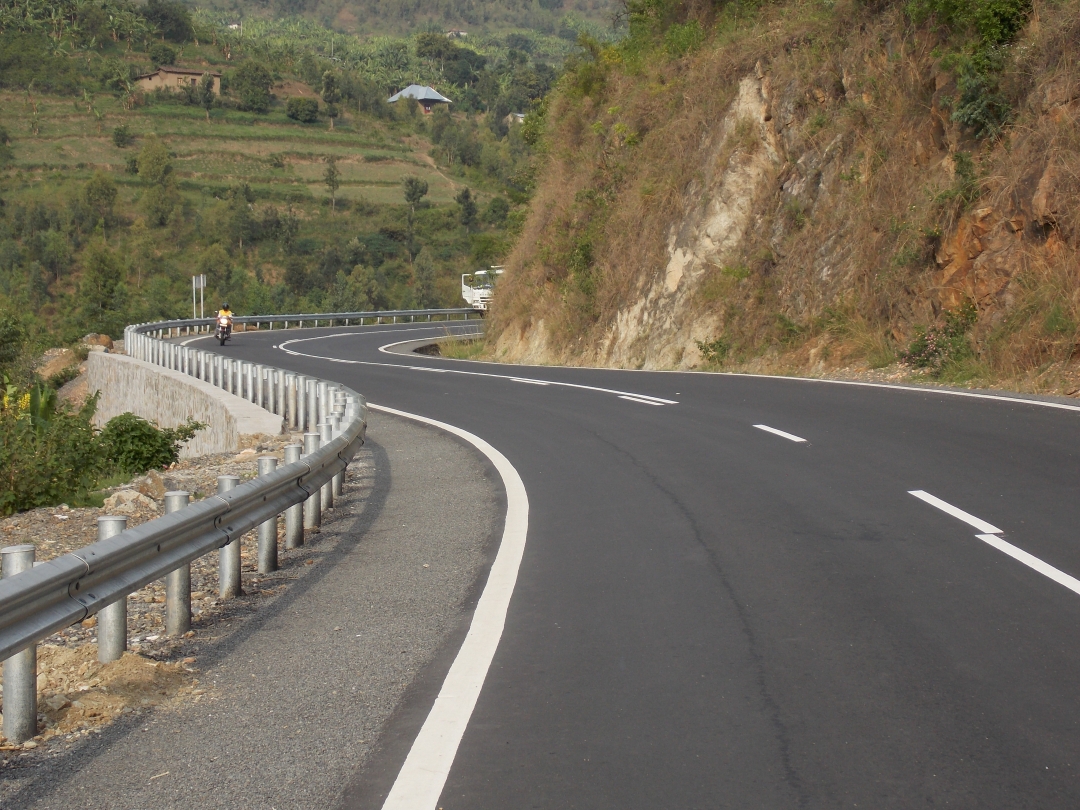
In Rwanda, the road network is the main part of the transportation system. Most of the country’s big towns can be reached by paved roads from Kigali, the capital. Rwanda also has roads that connect to other countries in the African Great Lakes region and this has helped to facilitate good trade through exports and imports.
Rwanda has over 30,000 km to 44,671km of roads, – including the classified and unclassified. Of these, 1,000 km (620 mi) are paved (tarmac / asphalt).
The rest are dirt roads, whose conditions range from smooth, hard surfaces that drain well to very bumpy, rough paths that can only be traversed by a four-wheel drive car. However, the government has an ongoing rehabilitation program to upgrade these roads.
Over 72% of the paved roads are national roads and 93% to 96% of these roads are well paved, are in good condition and operate effectively.
Paved roads
Most of the main towns in the country and to different border points are connected by well maintained paved roads. the major routes from Kigali connect from Kigali to towns like Musanze (Ruhengeri), Kibuye and Gisenyi. some paved roads are single carriageway (no lane for cyclists) while others are dual carriageways.
Some of the main routes connecting from Kigali and other parts of the country
1.Kigali to Gatuna/Katuna Via Byumba : This is the main northern route (road) that provides quick access to Kabale then to Kampala in Uganda.
2.Kigali to Cyanika border via Ruhengeri: This is another road that connects Ruhengeri to Kisoro in Uganda. this route offers scenic views of the Virunga volcanoes/massif.
3.Kigali – to Kayonza then to Kagitumba/ Mirama hills border via Nyagatare: This road runs to the far northeast of country connecting to Uganda – in Ntungamo district.
- Kigali to Kayonza via Rwamagana: to the eastern part of the country, this road provides access to Akagera National Park.
- Kayonza to Rusumo (Tanzania border) via Kibungo: This route is the best and main connection between Rwanda and Tanzania. Far northeast of Rwanda, the border is a high bridge over River Kagera which is also part of the Nile-the longest river in the world.
6.Kigali to Kibuye (Karongi) via Gitarama: From the city to Lake Kivu, this road crosses the Congo Nile watershed.
- Butare to Changugu via Gikorongo: This road stretches through Nyungwe Forest to lake Kiu shores. It also connects to Bukavu in D R Congo.
8.Kigali to Gisenyi Via Ruhengeri (Musanze): this road passes through the hilly areas around Mount Kabuye, west to th edge of the Virunga volcanos and ends at in Gisenyi at the shores of Lake Kivu. The same road also connects to Goma in DR Congo.
Though the border points between Rwanda and Burundi have been temporarily closed since January 2024, Rwanda has a well paved road that connects from Kigali to Kirundo (northern Burundi) via Bugesera.
Road transport within Kigali
Unlike other towns in Rwanda, Kigali’s road system is well planned. The city has well paved roads that link the main districts, like Gasabo, Kicukiro, and Nyarugenge.
Ring roads and radial routes help to reduce traffic around more smoothly by connecting suburban areas to major highways and feeder roads.
To reduce traffic and improve infrastructural development the government keeps improving roads, making lanes wider, and making drainage systems better.
Public transport
-
City buses
As of April 2026, Kigali’s roads are going through an enormous transformation. Dedicated bus only lanes are being added to make travel faster, less traffic, and make the city more convenient and environmentally friendly.
In Kigali, public buses are the main way to get around town. They have specific routes and times and connect different parts of the city.
Key features of city buses
- They are operated by organized by private companies and individuals, all under government supervision.
- They have designated stop over points and at specific hours of the day.
- They have affordable fares where payments are done using a smart card “tap and go” system. No need for conductors to collect cash. Tickets are sold at the bus stops by an employee (conductor). the tickets have prices set by the government to and from specific destinations.
- Nyabugogo bus park serves as the main hub and starting point for different city buses to different parts of the city.
- They can carry over 70 + passengers as some people are allowed to go standing.
- They are equipped with automatic speed governors and other electronic – speed limiting devices for safety and complying with the traffic regulations.
Some of the Kigali bus operators include:
Kigali Bus Services (KBS), Royal Express, Ecofleet Solutions, Rwanda Federation of Transport Cooperatives (RFTC), Jali transport Ltd, Select Express Ltd, Shalom transport Ltd, Ebenezer Express Ltd etc…
-
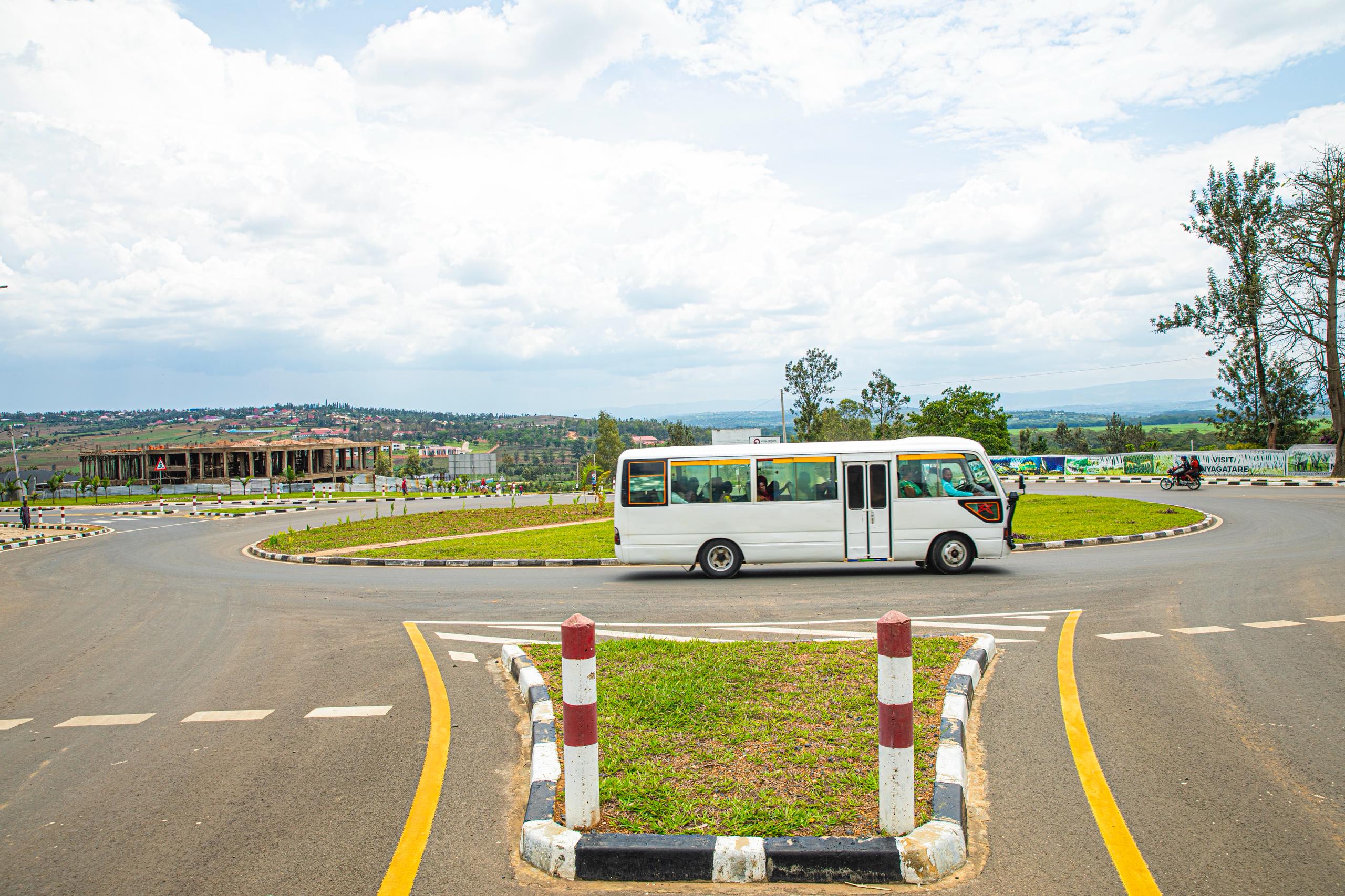
Toyota coaster buses (minibuses)
Under public and private transportation in Kigali, the coaster buses are often used for corporate travel, trips and airport transfers.
They are so reliable and licensed to carry 25 – 30 passengers including the driver. At times they operate across the country and cross-border.
Multiple travel agencies often rent them out to travelers but must come with a driver. Daily charges range from $150 – $350 per day depending on the itinerary.
They complement the electric buses and serve along routes outside Kigali on narrower roads.
-
Moto taxis (motorcycles)
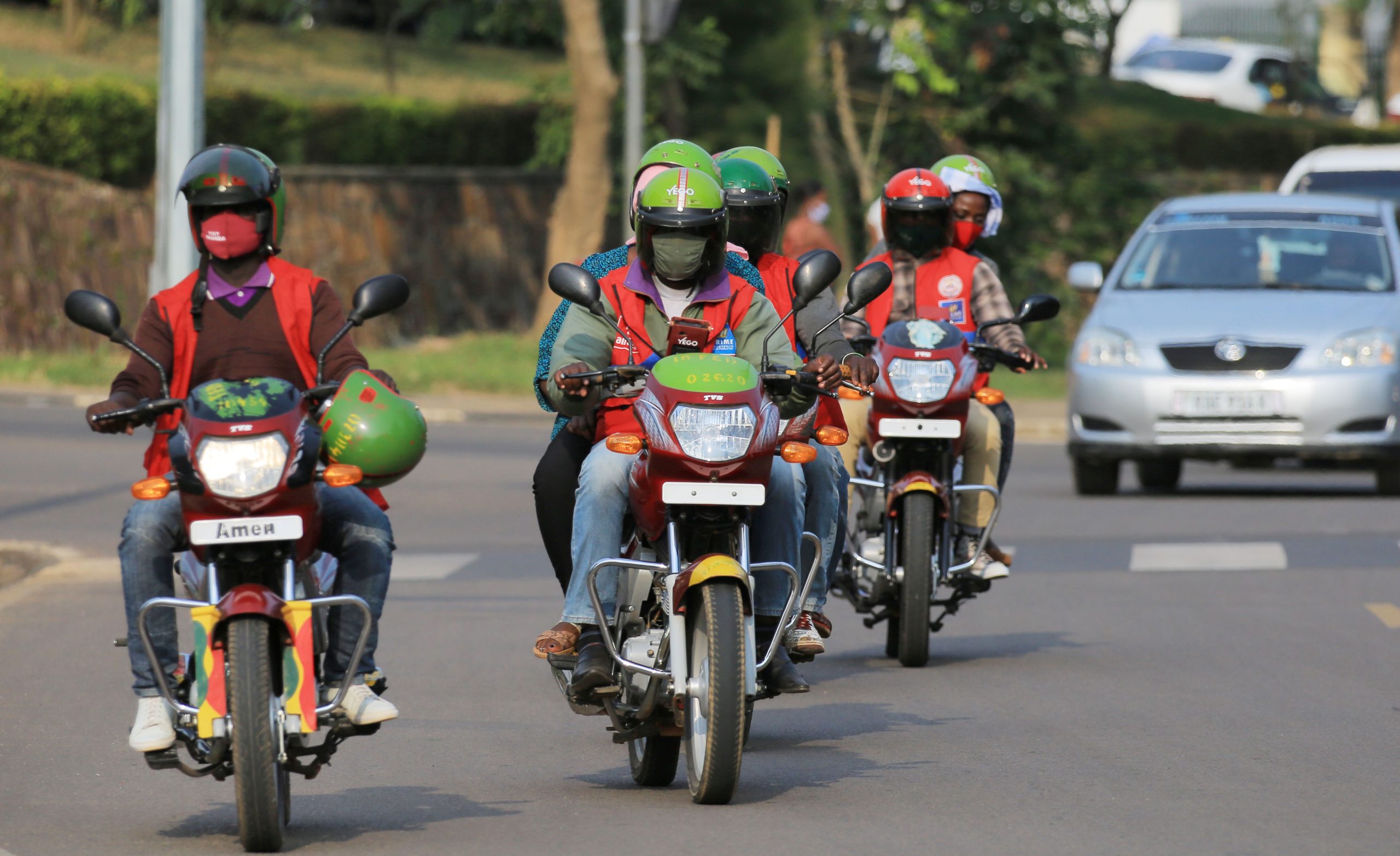
Locally known as “motos” are common means of transport in Kigali, they are fast, cheap, and ever present for any quick travels.
Moto riders hang out on designated stations, junctions, or you can wait and find one at the roadside.
Each motor carries one passenger who must also have a helmet.
Some motor use fuel while others use re chargeable batteries.
Fares charged within and areas close to the city center range from 500Rwf to 2000Rwf.
All moto licensed operators can easily be identified by wearing reflective helmets.
Moto rides can be booked digitally through services like” Yego Moto or Move”.
-
Taxi cabs and ride hailing services
For travelers who wish to move privately, accommodations can arrange private transfers and taxi services.
Ride-hailing platforms like Yego Cab are also used for private transfers. Such rides can be booked online and payments made in cash or via mobile money. the home-grown digital solutions have enabled data structures and pricing more affordable and easily controlled within the country.
-
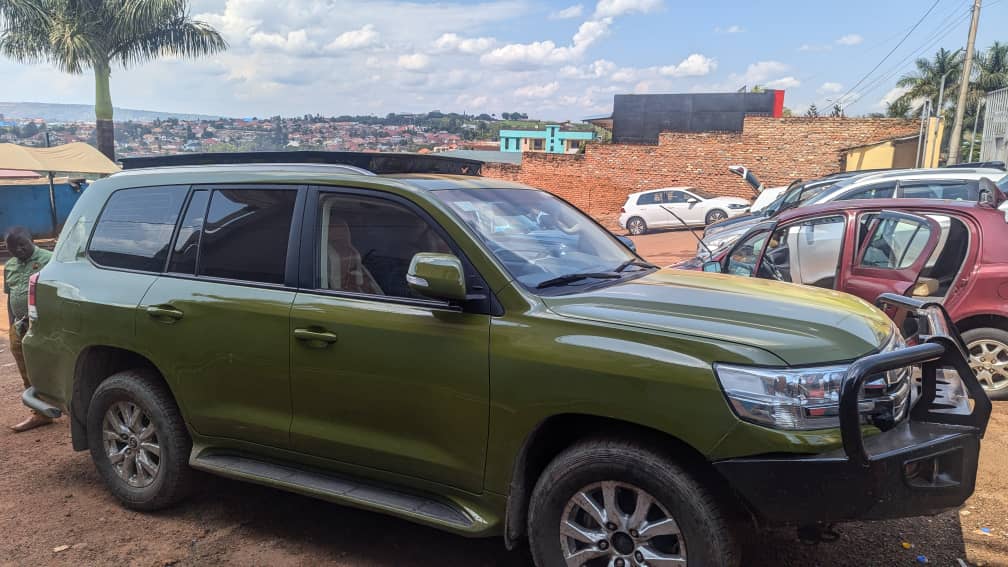
Private vehicles
Cross-border vehicles
Though Rwanda is a land locked country, it carries out cross border transportation which has also enabled economic growth. Connections are made to countries like Uganda, Tanzania, Burundi and the Democratic Republic of Congo.
Cross border movements facilitate the movement of goods, passengers, tourists, government official and other humanitarian services.
Under the cross-border vehicles are the those that are owned by tour agents who rent them out cross or self drive or guided safaris.
Those travelling for humanitarian reasons often use smaller vehicles with key providers like ‘Easy ride, Gotis transport’…
Cross border buses are also available to connect to different countries from Nyabugogo bus park. They include Trinity express, Jaguar Executive Coaches, Volcano Express, Modern Coast Coaches among others. These buses connect to cities like Kampala, Nairobi, Dar es Salaam, Goma, Bujumbura and other parts of East Africa.
The major border posts connecting Rwanda to her neighbors include Gatuna/Katuna border, Cyanika border, and Kagitumba border connecting to Uganda, Rusumo border connecting to Tanzania. Rusizi border and Goma border connecting to Democratic Republic of Congo and Nemba border connecting to Burundi.
Road transport challenges in Rwanda
Urban traffic: Kigali is developing at high pace. With the expansion of business, economic growth, rising incomes and urbanization, the number of private car owners has increased leading to heavy traffic jam especially in the peak hours when people are heading for work and back home. traffic delays lead to delayed transportation. fuel wastage, air pollution, increased transport costs, and effects on emergency services.
Road size: Many roads especially in the city and some towns were developed when the country had a less population and cars However, with the rapid urban growth there’s more stress on infrastructure. Some roads have; narrow lanes, limited parking spots, and less junctions thus creating high traffic in business areas.
High transport costs: Since Rwanda is land locked country, its imports and exports are highly charged for transportation from the coast ports like Mombasa and Dar -es Salaam. Rising fuel costs also affect transportation of goods, services and people. Transport operators always pass on the cost effects to consumers leading to increased travel fares and food prices.
Poor road conditions in the rural areas: Though Rwanda has a good road net work system with paved roads in different parts of the country, some feeder roads in the rural areas become too dusty in the dry season and muddy during the wet season. Some are narrow, have poor drainage systems and broken bridges, making it difficult for transportation of agricultural products and access by tourists.
Road accidents: Despite the strict safety measures and improved roads, accident always take place due to reasons like reckless driving, over speeding, phone use while driving, limited side walks for pedestrians and unsafe road crossings among other reasons.
Over dependence on road transport: Rwanda largely depends on road transport for most of its commercial activities and passenger movements, this creates pressure on the roads leading to increased traffic, , increased fuel consumption, faster road deterioration especially by heavy tracks, hence leading to increased maintenance costs.
Air and environmental pollution: The increased number of fuel vehicles in the country has raised concerns about pollution due to different emissions like dust, noise, and gas. this later leads to climatic changes.
Despite the different challenges, road transport remains the main national transport system for both rural and urban movements, for commercial and personalized travels. Rwanda now has one of the best planned and most ambitious road transportation systems in East Africa.